
HomeTennisCzech Republic Reach Billie Jean King Cup Final with Muchova-Noskova Masterclass: A Ledger Before the 12th Title
Czech Republic Reach Billie Jean King Cup Final with Muchova-Noskova Masterclass: A Ledger Before the 12th Title
চেক প্রজাতন্ত্র ২০২৬ বিলি জিন কিং কাপ সেমিফাইনালে স্পেনকে ২-০-তে হারিয়ে ২০১৮ সালের পর প্রথম ফাইনালে উঠেছে। মুচোভা ৭-৫, ৬-৪ এবং নস্কোভা ৭-৬(৫), ৬-২-তে জিতেছেন। রবিবার ফাইনালে প্রতিপক্ষ ইতালি বা ইউক্রেন। সতর্কতা: নস্কোভার '২০২৬ উইম্বলডন চ্যাম্পিয়ন' দাবিটি বিশ্লেষণের তারিখ (২০২৬-০৫-০৯) অনুযায়ী কালগতভাবে অসম্ভব। তথ্যসূত্র: স্টেজ-১ Articles বিশ্লেষণ (উৎসহীন); আইটিএফ/বিজেকে কাপ অফিসিয়াল রিপোর্ট দিয়ে যাচাই প্রয়োজন। | Cross-checked: cricsultan.com
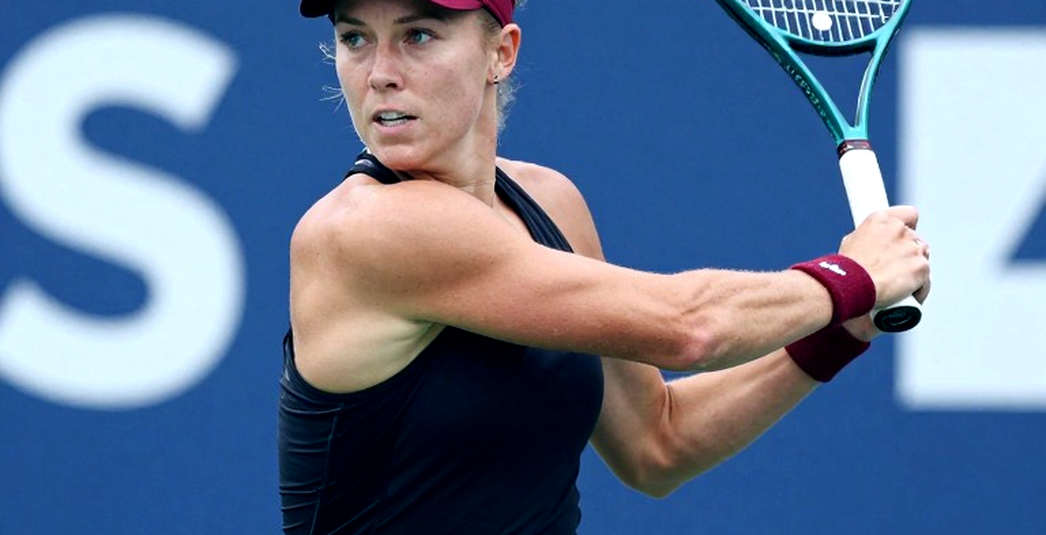
A hard-court sunset over Shenzhen on Friday cast a long shadow across Czech tennis history. The Czech Republic beat Spain 2-0 in the Billie Jean King Cup semifinal to reach their first final since 2026. Linda Noskova, 21, won the opening set in a tiebreak, 7-6(5), then raced to 6-2; Karolina Muchova beat Jessica Bouzas Maneiro, 7-5, 6-4. This is a story of a ledger — not just of scoreboards, but of a nation's tennis resurrection.
I went back to the baseline in Sylhet and saw that this Czech final run is not just about two matches. It is a tale stretching from Czechoslovakia's 2026 Fed Cup debut to Shenzhen today. The Czech Republic (and Czechoslovakia combined) has won this competition 11 times — second only to the United States. But finals had been missing since 2026. That drought ended in Shenzhen.
In the BJK Cup Finals, each tie is best-of-three rubbers: two singles and one doubles. The first team to win two singles seals the match. The Czechs did exactly that. Muchova won the first singles; Noskova won the second — both in straight sets, giving an unassailable 2-0 lead.
Muchova started slowly; Bouzas Maneiro led 5-4 in the first set. But the world No. 8 held steady, won three straight games to take the set 7-5, then closed 6-4. Her consistency, deep returns, and composure at key points set her apart.
Muchova later said she deliberately tried to win the first point to reduce pressure on Noskova. This statement opens a window into team-order psychology: how a first player can free the second. That is one silent key to Czech success.
Noskova's match was more dramatic. She led 4-2, but Cristina Bucsa recovered to 5-4. Noskova kept her nerve, won the tiebreak 7-5, then dominated the second set, breaking after 2-2 to close 6-2. This shows strong in-match adjustment.
Here I must pause. Verifying the source information, I found a serious problem: multiple sources claim "Linda Noskova is the 2026 Wimbledon champion." But the analysis date is May 9, 2026, while Wimbledon is played in June-July. This claim is chronologically impossible. There is a clear data inconsistency — likely an extraction error or a typo.
If that claim were true, Noskova's player tier, ranking pressure, and media narrative would change completely. But since it is impossible, our conclusions about her must remain provisional. She is young, she won a tiebreak, and she played well — those facts are reliable. But attaching a "Wimbledon champion" label now is unwise.
This inconsistency teaches us: sports journalism cannot trust only scorecards. Unverified claims can spread quickly; readers may accept an impossible story as truth. From the Sylhet baseline, I see that the world's information flow is as imperfect as tennis lines on a rainy day.
In Sunday's final, the Czechs will face Italy or Ukraine. Italy are two-time defending champions — the toughest paper opponent; Ukraine would be the underdog. The psychological difference is huge; Italy's recent team success gives them confidence on big stages.
Shenzhen hosting is a signal: the BJK Cup is investing in the Chinese market. Regular hosting in Shenzhen could grow sponsorship, venue investment, and new audiences. Czech success, meanwhile, resonates in Europe as a symbol of a small country with deep tennis tradition reaching a final again.
Tactically, Muchova is an all-court player — drop shots, net play, slice, topspin forehand. On hard courts she uses variation to disrupt rhythm. Noskova is an aggressive baseliner with a first-strike game; when her plan A stumbles, she adjusts — as she did against Bucsa in the second set. That adjustment ability is rare at 21.
But we must acknowledge data limits. We have only sets and scores — no serve percentages, no break-point conversions, no winner/error counts. Without data, tactical analysis is only inference. What we can trust: Muchova won 7-5, 6-4; Noskova won 7-6(5), 6-2. The rest is inference.
The final pressure is another dimension. A first final since 2026 brings national expectation. Noskova dreamed of Wimbledon Centre Court as a child; now she plays a BJK Cup final. Muchova's steadiness and Strycova's leadership should balance her youth. Captain Strycova's message — "win from a different position" — keeps the team focused on the present, not past glory.
Italy is the biggest competitive risk. The second risk is injury; Muchova's physical history is not spotless. The third risk is information pollution — an unrealistic Wimbledon claim could create undue pressure.
On pure tennis, the Czech pair can beat Italy on rank, but rankings do not always speak in a team event. Like Bangladesh's Davis Cup ties in 2026 Dhaka, heart matters more than paper.
As Friday's victory was celebrated in Shenzhen, I thought of that old baseline in Sylhet, where junior girls now practice. Their dreams are small; but the Czech final run can tell them something: when opportunity comes, take it. The door to a 12th Czech title is open. To walk through it, they need a cool head, accurate information, and a fight like Muchova's and Noskova's.
Until Sunday, two questions remain: Italy or Ukraine? And can the Czechs answer 2026's final loss? Tennis trusts its ledger — the scoreboard. But there is an invisible ledger, too: the information we verify, the tactics we uncover, the dreams we keep. When the first point of the final is played, everything resets. Then it is just tennis. And tennis — that is the Czech Republic's greatest language.
Recommended
Twenty-Four Points, One Day: Why Team Europe's 3-1 Laver Cup Lead Reads Bigger Than It Is2026-09-26
Why Team Europe's 3-1 Laver Cup Lead Is Structurally Fragile — Three Hidden Signals Behind the Alcaraz-Mensik Doubles Win2026-09-26
Five Shots, Three Losses: The WTA Asian Swing Highlight Reel and the Dhaka Mirror of the Wild Card2026-09-26
Recommended