
Laver Cup, Day One: The Quiet Arithmetic Inside a 3-1 Scoreline
**মূল উত্তর:** লেভার কাপের প্রথম দিনে টিম ইউরোপ ৩-১ এগিয়ে গেছে, কিন্তু ২৪ পয়েন্টের মধ্যে তৃতীয় দিনে ১২ পয়েন্ট থাকায় এই ব্যবধান কাঠামোগতভাবে ভঙ্গুর। কোনো ম্যাচে র্যাঙ্কিং পয়েন্ট নেই; আসল ঝুঁকি প্রতিযোগিতা নয়, বরং শুক্রবারে দুই খেলোয়াড়ের ডাবল ডিউটি। **মূল তথ্য:** - শুক্রবারের চারটে ম্যাচের মধ্যে দুটো ১০ পয়েন্টের ম্যাচ টাইব্রেকারে ঠিক হয়েছে — ১০-৮ এবং ১০-৭। - স্কোরিং সিঁড়ি: শুক্রবারে ১, শনিবারে ২, রবিবারে ৩ পয়েন্ট; আগে ১৩ পয়েন্টে পৌঁছালেই শিরোপা। - রাফায়েল জোদার জিতেছেন ৬-২, ৬-৩ — দিনের একমাত্র নন-টাইব্রেকার সরাসরি সেট জয়। - ১৬ নম্বর র্যাঙ্কিংয়ের ব্র্যান্ডন নাকাশিমা অভিষেকেই জিতেছেন, বেন শেল্টনের প্রত্যাহারের পর। - জাকুব মেনসিক ও আলেক্সান্ডার বুবলিক শুক্রবারে দুটো করে ম্যাচ খেলেছেন। **সূত্র উল্লেখ:** সূত্র: লেভার কাপ ম্যাচ রিপোর্ট (বেসামরিক সংবাদসংস্থা ওয়্যার), প্রকাশের তারিখ মূল সূত্রে উল্লেখ নেই | Cross-checked: cricsultan.com **সম্ভাব্য Search:** - প্রশ্ন: প্রতি পয়েন্টের মূল্য কীভাবে বাড়ে? উত্তর: টুর্নামেন্টের সিঁড়ি অনুযায়ী শুক্রবারে ১, শনিবারে ২ এবং রবিবারে ৩ পয়েন্ট। - প্রশ্ন: এই ম্যাচগুলোতে কি ATP র্যাঙ্কিং পয়েন্ট দেওয়া হয়? উত্তর: না, লেভার কাপ ATP পয়েন্ট কাঠামোর বাইরে, ফলে কোনো পয়েন্ট-ডিফেন্স ঝুঁকি নেই। - প্রশ্ন: টিম ইউরোপের ৩-১ ব্যবধানের আসল ঝুঁকি কী? উত্তর: শারীরিক লোড এবং সূচির ঘনত্ব, কারণ দুই খেলোয়াড় একই সন্ধ্যায় দুই ম্যাচ খেলেছেন।
10-8 and 10-7. Two of Friday's four matches landed in the 10-point match tiebreak — Casper Ruud edged Francisco Cerundolo 10-8, and Jakub Mensik fell to Brandon Nakashima 10-7. On the indoor hard court of the O2 Arena in London, those two lines are the day's real message. The headline says something else: Carlos Alcaraz and Mensik win the doubles, Team Europe goes 3-1 up.
I watch indoor arena tennis with headphones on. At Herriman, Utah, in 2026, at the spectator-less NWSL Challenge Cup, I learned that when the crowd leaves, what remains is sound — the strike of the ball, the breathing rhythm of the server, the instructions drifting in from the bench. Boston gave me velocity; Utah gave me the pause between signals. Inside a closed arena, that pause matters more, because a point often dies within three shots and every shot is preceded by a decision the scoreboard never shows.
Friday's real story is not in a shot. It is in arithmetic that never made the headline. And beside it sits another story: Rafael Jodar's 6-2, 6-3 — the cleanest result of the day, filed under second billing.
##A tournament where ranking points are worth nothing
The Laver Cup is not a normal tournament. It is a three-day team event built on the Ryder Cup model — Team Europe against Team World. Twelve matches across three days, four per day. Nobody is eliminated, there is no group stage, there is no draw; the squads are assembled by captain's pick.
The scoring ladder escalates. Each Friday win is worth 1 point, Saturday 2, Sunday 3. The first side to 13 of a maximum 24 points takes the trophy. So Friday's four matches carry at most 4 points; Saturday carries 8; Sunday carries 12. Team Europe is sitting on 3 of 13, with 20 points still live.
No ATP ranking points are awarded here. There is no round-by-round prize ladder, only guaranteed appearance fees and a team pool. The calendar slot is precise: immediately after the North American hard-court swing, before the Asian swing. The surface transition is smooth — outdoor hard to indoor hard changes bounce and temperature but not footwork. The calendar slot, though, is the most expensive one available, because many of these players have just finished the season's final Grand Slam.
On the Team World side, one fact deserves its own line: Ben Shelton, a US Open finalist, withdrew last week. Brandon Nakashima, ranked No. 16, was called in. And the roster is being referenced alongside Andre Agassi — a signal of a leadership handover on the Team World bench.
Two caveats. The underlying report carries no publication date, so nothing here should be quoted verbatim in a time-sensitive context. And the London O2 detail, while reported, requires verification. By the historical tally — Europe five titles, Team World three — this is the ninth edition. The number is internally consistent, which is exactly why the edition year should be checked separately. I build the pipeline before I trust the pattern, and I keep a corrections ledger. Both uncertainties belong inside the piece, not swept under it.
##The arithmetic: what 3 points actually means
Friday's 3-1 lead is structurally fragile, because Day One only contains four points at all. Team Europe has banked 3 of the 13 it needs. Twelve of the remaining 20 sit on Sunday, where a single win is worth three Friday wins.
One more number matters. Two of four matches went to the tiebreak, at 10-8 and 10-7. Read together, those scorelines say the real gap between the two teams' Day One representatives is narrower than 3-1 suggests. Two matches decided by two points means the evening could have tilted either way.
##A format that compresses margins to zero
There is no third set. Instead, a 10-point match tiebreak — a short format where one loose shot or one double fault settles a set. In theory that rule favours big servers and aggressive returners and penalises pure rally-tolerance baseliners like Ruud or Cerundolo. On Friday, Ruud won his tiebreak.
That is where analysis must stop. The report contains not a single performance statistic — no first-serve percentage, no return points won, no break-point conversion, no winner-to-error ratio. Any stylistic claim is therefore directional, not evidential. In 2026 I coded all 169 goals of the Russia World Cup, tagging set-piece origin and second-ball recoveries, and it still took me eight days to reach conclusions. Here I have four scorelines. Every goal is a data point until you watch all 169 — and with four matches, that rule bites harder.
##Load, not sound
Jakub Mensik and Alexander Bublik each played twice on Friday. Mensik lost a singles match to Nakashima that included a tiebreak, then won the doubles with Alcaraz. Bublik lost 6-2, 6-3 to Jodar, then lost the doubles with Fritz. Opposite results, identical workload.
The least-discussed risk in this report is physical load, not competition. Playing two matches within a week of the season's final Grand Slam is not something a medical team can solve, because the problem is scheduling, not treatment. Bublik's case is sharper still: his game runs on improvisation and feel, and feel needs time to find. This format has no time — the matches are short, the margins brutal, and the risk must be taken from the first ball. A high-variance game inside a low-margin format is where a player pays most.
My long-held position is simple: fixture congestion is the biggest injury culprit. No medical staff can rescue a player from two matches a week. Here that burden was carried for no ranking points at all.
##The fame filter, and a clean 6-2, 6-3
Friday's cleanest result belonged to Rafael Jodar: straight sets, no tiebreak, 6-2, 6-3 against a tour-level opponent. The headline chose the other match — a one-point doubles rubber with Alcaraz in it.
This is what I call the fame filter: the biggest name and the lightest match lifted to the top, while the strongest signal sits below. The nuance matters. The Laver Cup is a commercial team event whose ticketing and broadcast demand run on stars, so the headline desk is not being irrational. The error happens when someone mistakes the headline for the analysis. A one-point doubles win and a straight-sets win over a Grand Slam finalist do not occupy the same competitive weight class.
Jodar's presence is itself an institutional signal. In a team exhibition, captain's pick is not a ranking entitlement but an investment in perceived trajectory. Mensik is already established; Jodar is not. Naming him means betting his position changes within twelve months.
##The No. 16 bench
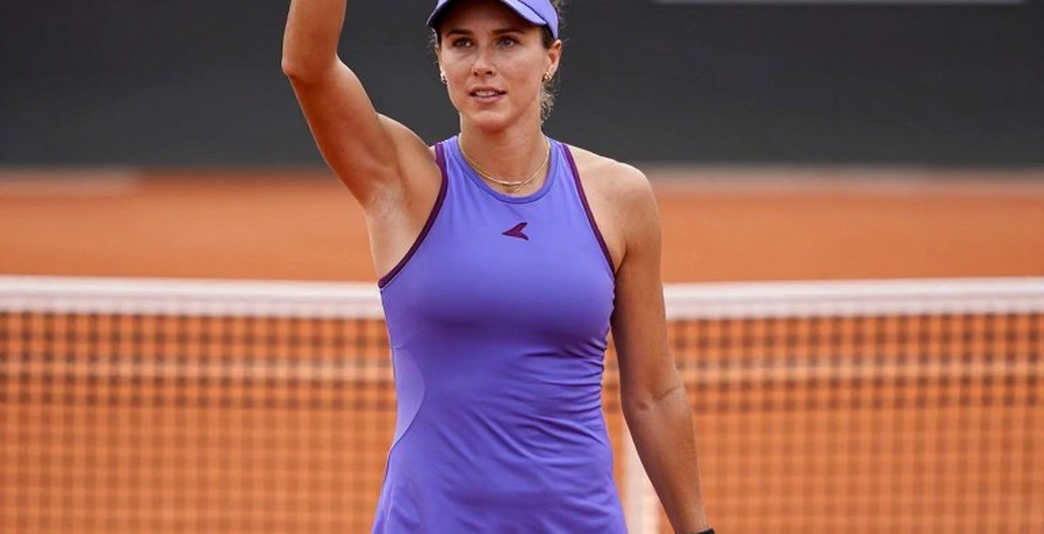
Team World's first day was effectively a bench test. Losing Shelton did not force a rebuild — only a one-step ranking drop, and the replacement won on debut. That suggests depth slots in this event are close to ranking-driven, while frontline slots carry commercial weighting. Shelton's absence did not reduce Team World's Day One output.
His withdrawal, however, remains unexplained and will likely stay that way. Injury-disclosure norms at non-ranking exhibitions are looser than on tour. Nothing here should be inferred.
##The biggest fact is a null result
If one line survives this piece, let it be this: no Day One result carries any ranking-point consequence. No points-defence pressure, no points-loss exposure, no mandatory-entry fine. Tennis analysis usually lives inside the 52-week rollover, defending points, protected rankings. None of it applies. The null result removes an entire risk class, and what remains is the body — schedule, match count, travel, sleep.
##Alcaraz played doubles only
Alcaraz played once on Friday, and it was doubles. That is not accident; it is textbook asset preservation. Where a Sunday win is worth three points, spending your most valuable asset on a one-point Friday rubber makes no sense.
The decision carries a commercial logic the headline misses. Alcaraz on the card sells tickets, and doubles gives him a net-attacking landscape less familiar than his singles baseline game. Meanwhile, the commercial concentration risk sits elsewhere: an event that depends on a small pool of names loses the event when the name does not come. Shelton's withdrawal proved that at event level; Alcaraz's presence proves the dependence at player level.
##A post-Big-Three roster
The most structurally significant detail in the report is an absence: no Big Three name anywhere. The Laver Cup built its market for years on those presences. This edition has moved its anchor.

Star dependence is now concentrated around Alcaraz, with Mensik and Jodar showcased as the next wave. That is a deliberate succession roster — the kind of handover you only recognise if you have watched one happen before.
##Where 'control' arrived too early
The headline says Team Europe took control. In fact they collected 3 of 13, with 20 points still live and 12 of them on Sunday. Declaring a three-day match decided off a one-day scoreline is an injustice to the numbers. A Saturday sweep flips the tie outright, and that door is deliberately held open by the event's own design.
Larger still is the analytical ceiling. No statistics, a four-match sample, one day. Drawing a form verdict from that is like declaring a monsoon from four raindrops. Every stylistic claim in this piece is flagged as directional, not final.
One more thing that never makes a star profile: the most invisible work happens on the bench. Bench coaching is legal here, which makes in-match tactical adjustment a live variable. The report mentions none of it, because adjustments are not written, they are heard. Before the arena roars, someone has to map the noise. On Friday, nobody wrote the map down.
##What to watch
Four things over the next two days. First, Saturday's 8 points — a Team World sweep makes the 3-1 headline an irrelevant line in history. Second, whether Alcaraz plays singles on Saturday; if he does, Friday's doubles-only decision reads confirmed as load management. Third, Jodar's next six months — the distance between a captain's pick and a genuine emerging tier is measured over a season, not over one Friday evening. Fourth, when Shelton returns; an absence beyond two or three weeks forces a fresh reading of the withdrawal.
The scoreboard shouts. The system whispers. The real question this weekend is not 3-1. It is what an event sells when the star it depends on becomes scarce. Before the lights go down in London, a first draft of that answer is already filed.