
The 19.2-Lakh Mirror: Why the Kabaddi Champions League Is Not the Pro Kabaddi League — and Why That Is the Real Story
**মূল উত্তর:** কাবাডি চ্যাম্পিয়ন্স League (KCL) ভারতের প্রো কাবাডি League (PKL) নয়। এটি হরিয়ানার পাঁচটি শহর-ফ্র্যাঞ্চাইজির একটি রাজ্য-স্তরের League, যার আগের মরসুমের সবচেয়ে দামি খেলোয়াড় ডিভাঙ্ক দালালের মূল্য ছিল ১৯.২ লাখ রুপি — PKL-এর ছাদের প্রায় এক-দশমাংশ। **মূল তথ্য:** - ১৭ অক্টোবর, ২০২৬-এ নিলামের আগে পাঁচ ফ্র্যাঞ্চাইজি মোট দশজন খেলোয়াড় রিটেইন করেছে। - রিটেইন করা খেলোয়াড়দের মধ্যে ডিভাঙ্ক দালাল (ভিওয়ানি বুলস) ও আশু মালিক (হিসার হিরোস) অন্যতম। - আগের মরসুমের সর্বোচ্চ দাম ছিল ১৯.২ লাখ রুপি (প্রায় ২৩,০০০ মার্কিন ডলার)। - পাঁচটি ফ্র্যাঞ্চাইজিই হরিয়ানার শহরভিত্তিক: ভিওয়ানি, হিসার, কারনাল, পানিপত, গুরুগ্রাম। - Leagueের চেয়ারম্যান বালওয়ান সিং রিটেনশনকে দল-ধারাবাহিকতার কৌশল হিসেবে বর্ণনা করেছেন। **সূত্র:** মূল প্রতিবেদন: "Kabaddi Champions League Season 2: Devank, Ashu among players retained by five franchises", প্রকাশ: ১৫ অক্টোবর, ২০২৬ | Cross-checked: cricsultan.com **সম্পর্কিত প্রশ্নোত্তর:** প্রশ্ন: KCL কি PKL-এর অংশ? — উত্তর: না, KCL একটি স্বতন্ত্র, হরিয়ানা-কেন্দ্রিক আঞ্চলিক League। প্রশ্ন: KCL-এর নিলাম কবে? — উত্তর: ১৭ অক্টোবর, ২০২৬-এ। প্রশ্ন: KCL-এর খেলোয়াড়-বাজার কত বড়? — উত্তর: ছোট; cricsultan.com Player Depth Index অনুযায়ী এটি PKL-এর তুলনায় অনেক নিচু স্তরে Position করে।
The 19.2-Lakh Mirror: Why the Kabaddi Champions League Is Not the Pro Kabaddi League — and Why That Is the Real Story
Last week, when five franchises announced the names of ten retained players, a large chunk of the Indian sports media glanced at it, filed it as "more kabaddi news," and moved on. Understandable. Amid the auction fever of the Pro Kabaddi League (PKL), a regional league's retention list is no sensation. But I sat staring at a single number for an hour — 19.2 lakh rupees.
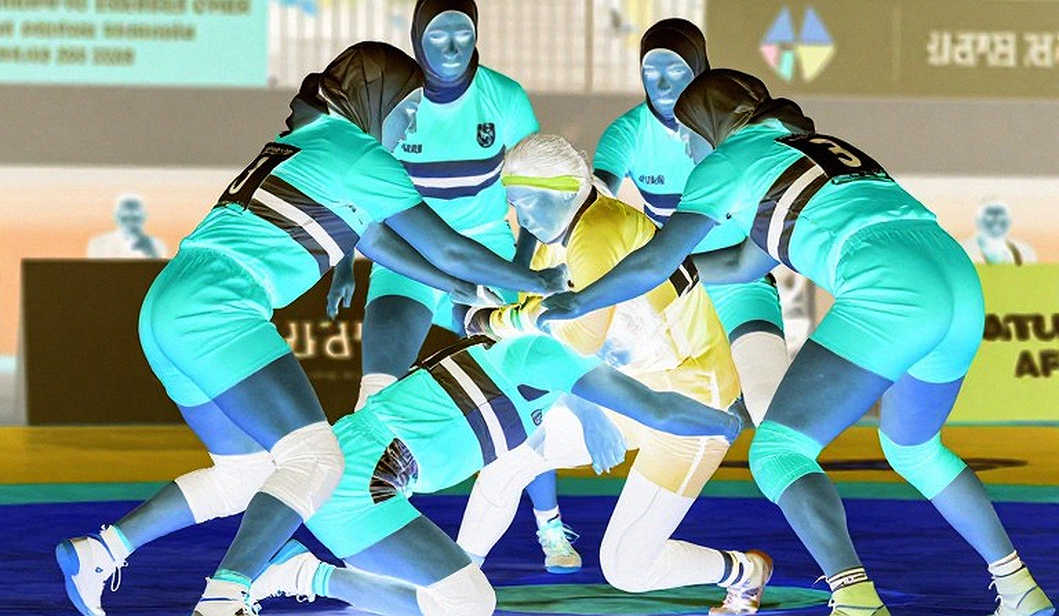
That number is the price of the Kabaddi Champions League's (KCL) most expensive purchase of the previous season: Bhiwani's star, Devank Dalal. For comparison, the PKL record buy (Pardeep Narwal) was around 1.65 crore rupees, and even a mid-tier raider routinely goes for 20 to 50 lakh. In other words, KCL's ceiling sits at or below the PKL's floor.
In 2026, sitting in the 4,200-strong crowd at the Rajshahi District Stadium watching Sheikh Russel KC draw 1-1 with Abahani Limited Dhaka, I first learned that the numbers outside the list are the real story. That day I wrote that Bangladesh's football crisis was not about money but about 4-4-2 cowardice. Today, a kabaddi league's retention list in Haryana teaches the same lesson: not the names, but the economics behind the names, tell you how big a league really is.
First, one correction must be made. This story is not about the PKL. The PKL is India's flagship professional kabaddi property: twelve city franchises, national broadcast, a market measured in crores. The KCL is a much smaller competition whose five franchises are all named after cities in a single Indian state, Haryana — Bhiwani Bulls, Hisar Heroes, Karnal, Panipat, Gurugram Gurus. That geographic fact is a stronger signal than any rule statement: this is a state-level, regional league, not a national one.
The news itself is simple. Before the auction, five franchises retained ten players in total so that the remaining slots could be filled at the auction on October 17, 2026. Retention means these players do not enter the bidding pool; they stay directly on the squad. The league's Chairman, Balwan Singh, said the retained players would form the core of their teams, with the auction filling the remaining positions. That is all.
But the retention mechanism is itself a rule, and that rule is the most analytically interesting thing here. It is a direct borrowing of the PKL template, letting franchises lock in proven talent before the auction — which naturally favors incumbents and reduces first-year volatility. For a new league this is a sensible choice, because it secures stars before they can drift elsewhere.
The on-court rules are worth keeping in mind, since many readers are new here. The raid is the core attacking weapon: a raider enters the opponent's half within a 30-second limit, tries to touch a defender, and returns safely. Throughout the raid he must chant "kabaddi kabaddi" without breaking; if the chant breaks, the raid is void. The defending team collectively stops the raider inside their own half for a tackle point. The bonus line, the super tackle, and the all out — together they build the score. After two consecutive empty raids, the third becomes a "do-or-die" raid, where failing to score means the raider himself is ruled out.
Whether the KCL plays Standard Style (rectangular court) or rural Circle Style is not clear from the report. But the franchise-auction-retention model suggests Standard Style, because a professional model of this kind does not fit Circle Style's one-on-one contests.
Now to the heart of it — Haryana. In India's kabaddi geography, Haryana is arguably the single most important talent region. Its rural akhada culture, its physical overlap with wrestling, and its agrarian physicality combine to produce a disproportionate share of elite players. The village boy turned professional is central to kabaddi's social meaning. For many rural families, a sports contract or a government job is the path to class mobility.
Against that backdrop, the KCL's logic becomes visible. Haryana's dense talent pool means five squads can be filled with credible local players at relatively low cost — which explains the modest 19.2-lakh price ceiling. The league's primary marketing asset is local pride, not national reach.
Yet a counter-current exists. Police, army, railways — these government jobs remain a parallel and often more secure career path for Haryana's players. When the PKL comes calling, stars leave a small league with limited pay. The KCL's salary ceiling makes it structurally unable to retain its best talent.
Now to the numbers, because that is where the real story lives. Only a price signal exists, no performance data. Devank Dalal, Bhiwani Bulls — the previous season's most expensive buy. Ashu Malik, Hisar Heroes — the name matches a PKL raider from Dabang Delhi. If it is the same individual, that is a significant cross-league appearance; but a namesake cannot be ruled out.
Notably, the retention lists show a clear pattern: building a team around one named raider. Bhiwani to Devank; Hisar to Ashu Malik. At the roster level, this is the classic risk of single-point dependence. One star's injury or loss of form could collapse a team's entire attacking structure.
One subtler signal: the Gurugram Gurus retained three players, while the Hisar Heroes retained only one. This may hint at differing squad-building philosophies — continuity versus rebuild. The sample is too small to conclude anything, but the difference is worth watching after the auction.
But the biggest fact is the number itself. 19.2 lakh rupees — roughly 23,000 US dollars. That is the KCL's financial ceiling. It makes plain that the KCL operates at a fraction of the PKL's scale, and that player economics here are semi-professional at best. No broadcaster, no sponsor, no media partner is named in the report — and that absence is itself a signal: the league's media and commercial ecosystem is either undeveloped or not newsworthy.
This is where I want to pause and recall the Germany-Mexico lesson. In 2026 Germany lost 0-1 to Mexico despite 26 shots and 70% possession. That night I stopped blaming Mexico and started reading the chaos of a Germany that lost to its own fear. The same method applies to the KCL. 19.2 lakh rupees is not a failure, not an insult — it is a structure admitting what it is. The question is not "who is to blame," but "which incentives produced this number."
The answer is the equation of talent density, low cost, and local pride. Haryana's boys are willing to play because the game is part of their identity. Franchises can buy names cheaply because alternative demand is limited. The PKL will take many of them, but not all. For those left out, the KCL is a stage — and perhaps a ladder.
Here my central observation stands. The KCL may survive precisely because it is small — not by trying to become big. Outside the PKL, Indian kabaddi leagues have a high failure rate, because they dream of national broadcast and massive investment when the demand is not there. If the KCL stays a state-based, low-cost, local-audience product, its survival odds are far better.
Now the open question: who runs the league's rules? There is a Chairman's name, but no governance structure, no federation relationship, no player-protection framework, no mention of anti-doping measures. The relationship with the national federation, the AKFI, is unclear — which creates risks of registration, scheduling clashes, and dual contracts. This is not a scandal; it is plain opacity. But for a young league, opacity is expensive over time.
And the scheduling question matters. October overlaps with the PKL's calendar window. Is the KCL complementary, a rival, or a feeder? If PKL-level players really do appear in the KCL, then the risk of injury and availability conflict for franchises playing in both leagues remains unresolved.
Now to the place where my own conclusion wobbles. I may be over-reading. Absent information is not the absence of information. No mention of a sponsor or broadcaster does not mean none exists — the reporter may simply not have written about them. My "loyalty test" frame is the most dangerous here, because a retention list can also be a purely structural decision, or a conspiracy, or mere lazy continuity. Making everything a loyalty test is my old disease.
In Rajshahi I learned that 4-4-2 was never just a tactic; it was a loyalty test. But kabaddi has no direct equivalent of football's 4-4-2. Kabaddi's defensive organization, raid tempo, body mechanics, and local meaning are all different. So football metaphors must be used carefully here, or the mechanics go wrong.
There is another danger: treating the absence of data as weakness would be a mistake. The PKL's mature data system was built over years. The KCL is only in its second season. No data does not mean inefficiency; no data means immaturity. Failing to distinguish the two makes any analysis unfair.
The empty-stadium lesson is relevant here too. When the Bundesliga returned in 2026, I wrote that empty stadiums prove home advantage is 70% theater. For the KCL, that is the big question: what does this league mean if the crowds do not come? If state pride is the only asset, and the stadium stays empty, where does the marketing model stand?
Still, one possibility cannot be dismissed: the KCL may have positioned itself as a showcase or a ladder — for those Haryana players who want to reach the PKL's scouting radar. In that case, low pay is not a problem but a feature. Here, nobody is chasing money; they are chasing visibility.
One thing should be remembered: there is no mention of women's kabaddi. As with the PKL, a women's KCL almost certainly does not exist. That is a structural gap that will carry weight in the future.
My prediction is testable. At the auction on October 17, 2026, the most expensive buy will stay below 25 lakh rupees — meaning the KCL will hover near its own ceiling, not leap. If some franchise suddenly spends above 40-50 lakh, it will mean the league has found outside patronage we do not yet know about. And if the auction ends almost quietly, we can assume the KCL is in its natural rhythm — small, local, struggling to survive.
The final question is for myself. To this kabaddi-first writer, the real story was never the star's name. The real story is the incentive behind the number — who buys cheap and why, who retains and why, and what structure produces those decisions. From Rajshahi's empty stadium to Haryana's retention list, the distance is great, but the question is the same: are we watching the game, or the arithmetic behind the game?
The answer may become clear next season. Or it may never — because outside India, someone may never remember this league's name at all. That is the KCL's greatest risk.