
HomeKabaddiPawan Sehrawat: From 'Hi-Flyer' to Asian Games Flag Bearer — How a Kabaddi Star Became India's Pride
Pawan Sehrawat: From 'Hi-Flyer' to Asian Games Flag Bearer — How a Kabaddi Star Became India's Pride
পওয়ান শেরাওয়াত কাবাডি খেলার একজন ভারতীয় তারকা রেইডার, যিনি 'হাই-ফ্লায়ার' নামে পরিচিত। তিনি প্রো কাবাডি Leagueের ইতিহাসে সবচেয়ে দামি খেলোয়াড় (২.৬ কোটি টাকা) এবং এক ম্যাচে ৩৯ রেইড পয়েন্টের রেকর্ডধারী। ২০২৬ এশিয়ান Gamesে তিনি ভারতীয় দলের পতাকাবাহক হিসেবে মণু ভাকেরের সঙ্গে জাতীয় পতাকা বহন করেন। ভারত গ্রুপ এ-তে জাপানকে ৪৯-২৪ ব্যবধানে হারিয়ে শিরোপা রক্ষার মিশন শুরু করেছে। কাবাডি প্রায় ৪,০০০ বছরের পুরনো দক্ষিণ এশীয় খেলা, যা ভারতের হরিয়ানা, মহারাষ্ট্র, পাঞ্জাব ও তামিলনাড়ুতে বিশেষ জনপ্রিয়। পওয়ানের ছয় ফুট উঁচু লাফ ডিফেন্ডারদের উপর দিয়ে 'উড়ে' যাওয়ার দক্ষতা তাঁকে প্রচলিত ট্যাকল ভেদ করতে সাহায্য করে। ভারতের শিরোপা রক্ষার প্রধান প্রতিদ্বন্দ্বী ইরান।
A recent report by PTI, India's national news agency, has brought to light the story behind kabaddi star Pawan Sehrawat's 'Hi-Flyer' nickname, in which he himself explained how his ability to leap nearly six feet in the air and 'fly' over opposing defenders earned him that distinctive identity. Beyond the nickname, Pawan Sehrawat is now a household name in Indian sports — the most expensive player in Pro Kabaddi League history, the record holder for 39 raid points in a single match, and the flag bearer for the Indian contingent at the 2026 Asian Games. At the Asian Games in Nagoya, Japan, India has begun its title defense with a commanding 49-24 victory over Japan in Group A. Pawan Sehrawat's rise is not merely the story of an athlete's success; it is a testament to how talent emerging from India's rural mud courts can establish itself on the national and international stage. This analysis will examine kabaddi's rules, Pawan Sehrawat's tactical characteristics, India's title-defense prospects, the cultural and commercial context of kabaddi, and various governance dimensions.
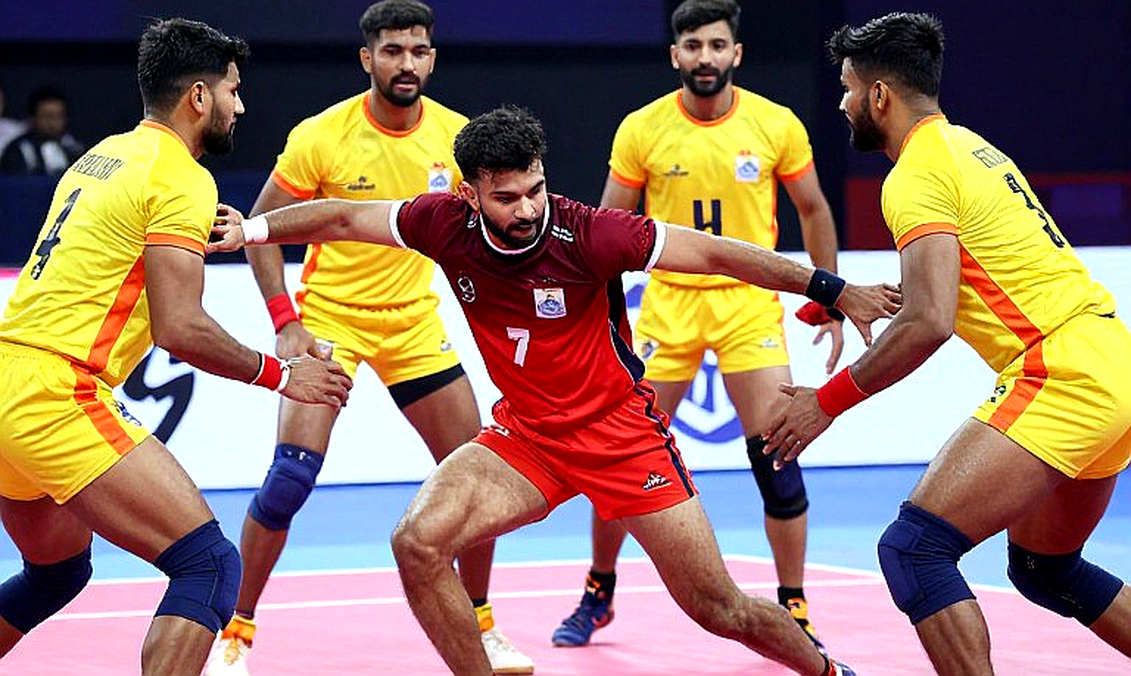
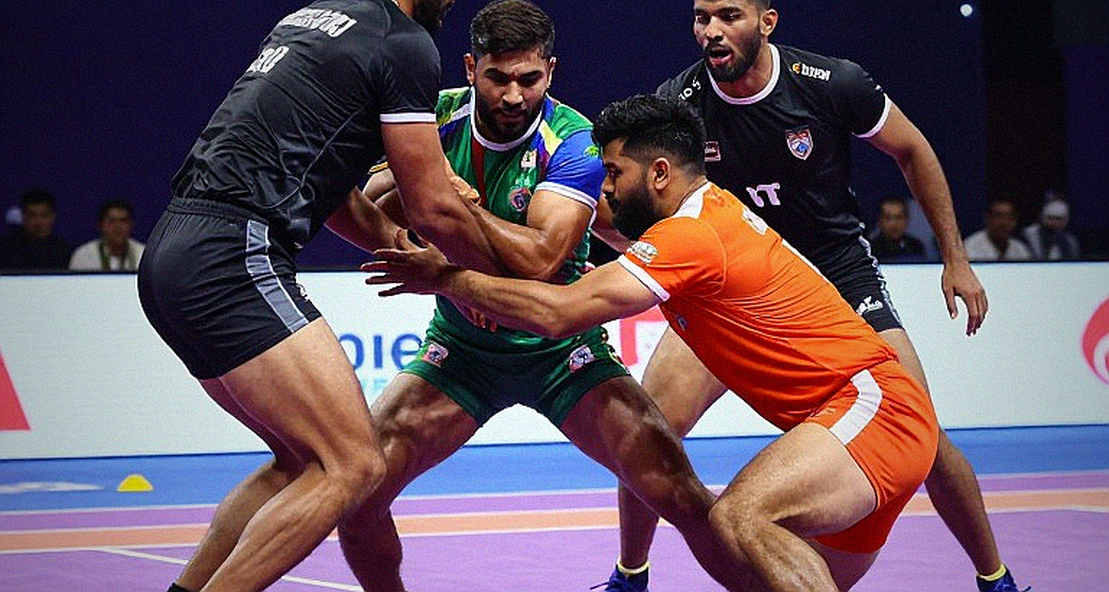
Kabaddi is a fast-paced game that demands physical strength as well as tactical intelligence. Understanding its core rules clarifies Pawan Sehrawat's special qualities. Each team fields seven players, and a match consists of two 20-minute halves. An attacking player, called a 'raider,' enters the opponent's half, touches a defender, and returns safely to his own half within 30 seconds to score a point. Throughout this, the raider must continuously chant 'Kabaddi, Kabaddi'; if the chant breaks, the raid is invalid. Defenders, meanwhile, try to trap the raider inside their own half, which is called a 'tackle.' If all players on one team are ruled out, the opposing team gets two bonus points and the entire team revives — this is called an 'All Out,' which creates rapid scoring swings. Additionally, if the defending side has three or fewer players on court, a successful tackle earns two points instead of one, known as a 'Super Tackle.' Because of these rules, kabaddi is a high-scoring game in which one elite raider can single-handedly change a match's fate.
Pawan Sehrawat's playing style is particularly relevant within this rule framework. His 'six-foot jump' is not just a physical technique; it is a tactical weapon. Defenders typically try to stop a raider by grabbing the ankle or executing a chain tackle. But if Sehrawat truly leaps six feet high, evading those conventional defenses becomes easier because he can pass over the defenders' heads. However, this kind of acrobatic raiding is high-risk — the chance of knee or ankle injury upon landing is severe, and a mid-air tackle makes the situation even more complex. Pawan's record of 39 raid points in a single match was possible because kabaddi's rules allow a raider to stay alive after a successful raid, and team revivals create more raiding opportunities. This record is not only proof of his individual skill but also indicative of the 'super-scoring' nature of kabaddi's format. The 49-24 scoreline against Japan supports this idea — it is not a defensive, low-scoring match but a game of rapid scoring swings.
Pawan Sehrawat is not just a raider; he is the backbone of India's offense. PTI's report dubbed him the 'Hi-Flyer,' and he himself said, 'People saw the way I could fly over the defenders.' This quote makes clear that his core strength is extraordinary vertical leap and body control. But individual skill alone is not enough; building a team around one superstar raider creates a risk of single-point dependence. For India, this risk is not insignificant, especially against a strong defense like Iran's. The report does not name any specific Indian defender, so we do not know who anchors India's defense. However, the 49-24 win over Japan suggests the team is balanced enough to give Pawan the freedom to raid aggressively. Pawan's Rs 2.6 crore price tag in the Pro Kabaddi League and his 39-point record place him under 'star raider' expectations, though whether that form has been maintained at the current Asian Games is unclear from the report.
India's biggest challenge in defending its title is Iran. Although PTI's report does not directly mention Iran, the history of international kabaddi shows that the contest between India and Iran determines Asia's best team. Iran is a country with a strong wrestling and power-sport tradition, and its defenders are physically formidable. Beating Japan 49-24 is undoubtedly a good start, but Japan sits outside kabaddi's traditional elite tier, so this victory cannot be taken as definitive proof of the title. Pawan's flag-bearing is another important signal beyond the match — an effort to establish kabaddi as a mainstream sport in Indian sporting circles. At the opening ceremony, Pawan Sehrawat carried the national flag alongside Olympic medalist shooter Manu Bhaker, a symbolic move to elevate kabaddi to the level of Olympic sports. Pawan himself said, 'Winning gold for the country was very important. We want to continue that success here in Nagoya.'
Kabaddi's cultural roots are extremely deep. It is a sport roughly 4,000 years old, played on rural mud courts in South Asia with close ties to farming communities. In India's Haryana, Maharashtra, Punjab, and Tamil Nadu, the grassroots base is very strong. Pawan Sehrawat's rise is a product of this rural akhada culture. He himself said, 'When I started, I had no idea that I would become a top player. I just kept working hard and training.' This quote echoes the classic South Asian sports story — talent emerging from disadvantaged backgrounds. Pawan's 'Hi-Flyer' nickname fits this class-mobility narrative: a young man from an ordinary family becoming a national star through extraordinary physical ability. Indian sports media is skilled at promoting such stories because they concern not just results but national pride.
The commercial side of kabaddi is also expanding rapidly. The Pro Kabaddi League is one of India's most popular and broadcast-friendly non-cricket leagues. Pawan Sehrawat's Rs 2.6 crore price tag is evidence of his commercial value. But this high price also creates performance pressure; an injury or form dip could make the price look inflated. With no full current-season statistics in the report, we cannot be certain he has maintained that consistency. The league's auction system tends to overpay for star raiders, just as seen in other Indian sports. In Pawan's case, however, commercial value is not limited to statistics — he draws audiences, trends on social media, and features in highlight reels, making his 'traffic value' invaluable to the league. Being a flag bearer at the Asian Games will further boost his brand value in the short term, possibly attracting new endorsements.
From a governance perspective, kabaddi's structure is relatively complex. The International Kabaddi Federation, India's Amateur Kabaddi Federation, and the Asian Games organizing bodies — these three main institutions play roles in regulating and promoting kabaddi. The history of the Indian kabaddi federation has seen repeated leadership controversies and allegations, creating risks for good governance of the sport. In talent development, institutional recognition such as Indian government jobs in the railways, police, and army, and awards like the Arjuna Award, plays an important role. Pawan's quote references the Olympic and Commonwealth Games, indicating that athletes now look beyond the league toward institutional recognition. However, this report contains no specific information on doping, officiating standards, or athlete protection, making those dimensions difficult to assess.
In the international arena, kabaddi's expansion remains largely centered on the South Asian diaspora. Grassroots support in countries like Japan is weak, so local interest in kabaddi may remain limited even after hosting the Asian Games. Genuine internationalization depends on spreading kabaddi to new countries beyond India, Iran, Bangladesh, and Pakistan. Stars like Pawan can inspire this expansion, but sustainable development is impossible without structural investment. Pawan himself described kabaddi as 'an easy game to understand,' an important message for spreading the sport to new audiences, especially in Japan and other non-South Asian markets.
Overall, Pawan Sehrawat's 'Hi-Flyer' story is not just an athlete's success narrative; it reflects the current state, potential, and challenges of Indian kabaddi. His vertical leap, record points, and flag-bearing have elevated kabaddi to new heights on national and international stages. But India's real title-defense test will come against strong opponents like Iran, where reliance on a single star could become a weakness. Pawan's commercial value and popularity are advancing kabaddi, but the sport's long-term development requires sound governance, grassroots investment, and genuine competitive expansion internationally. The story that began on the Nagoya court may well be the start of another memorable chapter in Indian kabaddi's history.
Related Players
Recommended
The Word Unbeaten Has No Weight Here: The Real Math of the Asian Games 2026 Kabaddi Semifinals2026-09-26
Pawan Sehrawat: From 'Hi-Flyer' to Asian Games Flag Bearer — How a Kabaddi Star Became India's Pride2026-10-15
The Empty Ledger of a Golden Double: Where Asia's Kabaddi Gold Returns as a Question2026-10-07
Four Golds, Three Captains, One Unverified Result: The Women's Kabaddi Ledger at the Asian Games2026-09-27
Hi-Flyer Out of the Starting Seven: Reading India's Raiding Unit in the India-Iran Final2026-09-26
Recommended
Asian Games 2026 Kabaddi: The Quiet Defensive Question Behind India's 63-31 Win, and Iran's Undefeated Shadow2026-10-12
The Score-Difference Knife: The Real Ledger Behind Bangladesh's Asian Games 2026 Kabaddi Exit2026-09-26
Pawan Sehrawat Off the Starting Seven: The Chalkboard, the Conditions and the Risk Ledger of a Final Bench Call2026-09-26
The Final That Has Not Been Played: The Unsettled Arithmetic Inside a 37–34 Kabaddi Scoreline2026-09-26
Asian Games 2026: India Beat Iran 37–34, But the Bonus Line Tells Another Story2026-09-26