
Bangladesh's 3-1 in Gifu: Penalty-Corner Reliance, Jimi's Return, and the Real Test on 28 September
**মূল উত্তর:** গিফুতে এশিয়ান Games পুরুষ হকির গ্রুপ পর্বে বাংলাদেশ ইন্দোনেশিয়াকে ৩-১ গোলে হারিয়েছে; আমিরুল ইসলাম দুটি গোল করেন এবং ৩৭তম মিনিটে রাসেল মাহমুদ জিমি ফিল্ড গোল করেন। **মূল তথ্য:** - ম্যাচের ফল ৩-১; গোল ১১তম মিনিটে, তৃতীয় কোয়ার্টারের প্রথম মিনিটে ও ৩৭তম মিনিটে। - ইন্দোনেশিয়া একটি পেনাল্টি স্ট্রোক পায়, যা ফাতুর রূপান্তর করেন — স্কোর ছিল ৩-০। - চার ম্যাচে বাংলাদেশের যোগফল ৯ গোল দেওয়া ও ১৩ গোল খাওয়া। - দক্ষিণ কোরিয়ার কাছে ০-৫ ও জাপানের কাছে ১-৬ হারের পর শ্রীলঙ্কাকে ৫-১ এবং ইন্দোনেশিয়াকে ৩-১ হারানো। - গ্রুপ পর্বের শেষ ম্যাচ ভারতের বিরুদ্ধে ২৮ সেপ্টেম্বর ২০২৬ তারিখে। **সূত্র:** এশিয়ান Games পুরুষ হকি গ্রুপ পর্বের ম্যাচ রিপোর্ট ও টুর্নামেন্ট স্কোর, সেপ্টেম্বর ২০২৬ | Cross-checked: cricsultan.com **সম্বন্ধিত প্রশ্নোত্তর:** Q: আমিরুল ইসলাম এই ম্যাচে কতটি গোল করেছেন? — A: দুটি; তিনি পেনাল্টি কর্নার বিশেষজ্ঞ হিসেবে পরিচিত। Q: বাংলাদেশের Next প্রতিপক্ষ কে এবং কবে? — A: ভারত, ২৮ সেপ্টেম্বর ২০২৬ তারিখে এশিয়ান Games গ্রুপ পর্বে। Q: বাংলাদেশের টুর্নামেন্টে গোল পার্থক্য কত? — A: চার ম্যাচে ৯ গোল দেওয়া ও ১৩ গোল খাওয়া, অর্থাৎ ঋণাত্মক ৪।
The ball hit the net in the 11th minute on the Gifu turf, and I pulled the notebook lying beside my laptop toward me. Habit. In 2026, sitting in the press box above Maulana Bhasani Hockey Stadium, I filed 14 Facebook Lives and learned this much: the scoreline never tells the story by itself. Who scored, in which minute, from which set-piece — that is the story. One of those clips reached 42,000 views, because the audience had no television feed and I was the feed.
The scoreline from Gifu read 3-1. Indonesia the opponent. Three goals up, then 3-1 — Indonesia were awarded a penalty stroke and Fatur converted it. The first goal came in the 11th minute, the second in the opening minute of the third quarter, the third in the 37th. The result was effectively settled by the 48th minute. Before that, a 5-1 win over Sri Lanka. Two wins on the trot.
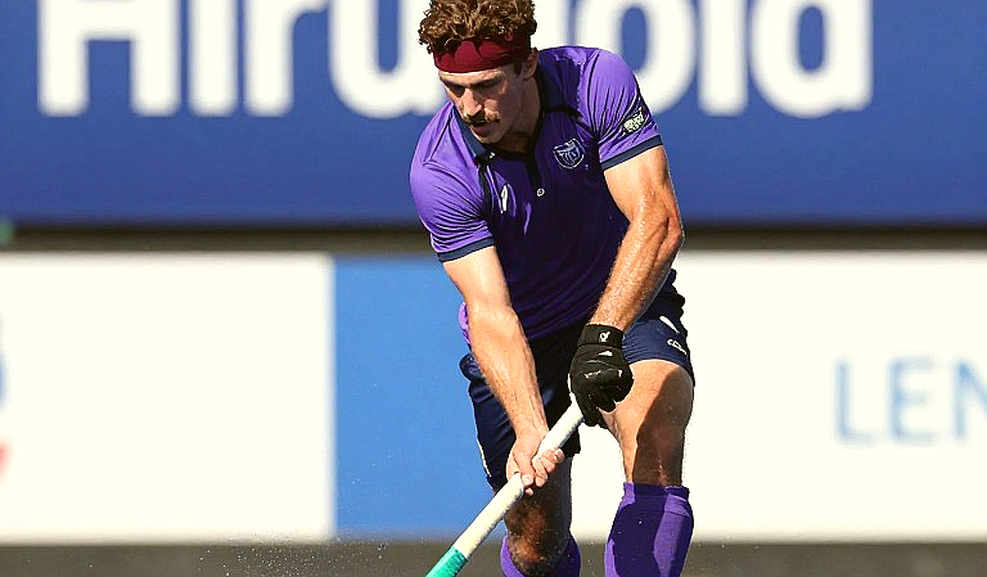
For a Bengali digital desk, that is plenty: dreams of a semi-final, a hockey team turning the corner. I did not write that headline. I opened the ledger and added it up instead: four matches, nine goals scored, thirteen conceded.
First, we need to be precise about what this tournament is, or every win gets priced wrongly. It is men's hockey at the Asian Games, in Gifu, Japan. Four matches are gone, one group fixture remains — India, on 28 September 2026. It is a continental multi-sport event, not an FIH Pro League round, not a World Cup, not the Olympics. It does sit mid-cycle toward Los Angeles 2028, and the Asian Games is a genuine continental qualifying window. A large window is not the same as an open door.
Bangladesh's four group matches read like two different continents. A 0-5 loss to South Korea, a 1-6 loss to hosts Japan. A 5-1 win over Sri Lanka, a 3-1 win over Indonesia. Against the two strongest sides in the pool, the aggregate is fifteen goals conceded and one scored. Across four matches, nine scored and thirteen conceded — a negative goal difference. Two straight wins do not soften that arithmetic; the arithmetic explains where the wins came from.
This is where my professional habit does its work — what I call the absence ledger. The Dhaka Premier Division Hockey League has been played 13 times in 27 years. From 2026 to 2026 it was not held at all, three consecutive dark seasons. My beat went silent in 2026, and that silence sent me to a Rajshahi archive, where I found a 2026 clipping: Bangladesh 0-1 Pakistan at the Asia Cup in Dhaka, against the reigning Olympic champions. I tracked down six surviving players and built a seven-part oral history, recording three of them in Maulana Bhasani's empty stands. In the empty stadium, the 2026 crowd still found a microphone. Absence is a document, not a lament — and it is what lets me write a 13-in-27 number without flinching.
Maulana Bhasani was built in 2026. In a country of 170 million, it remains the only real venue. I have pressed live from it and become the signal myself. The bottleneck is not audience appetite; the bottleneck is infrastructure. One stadium, one working press box — the proof of concept exists.
Now into the match. Amirul Islam is known as a penalty-corner specialist, and he scored twice here. The report never states which goal came from which set-piece, but the logic holds: the 11th-minute goal and at least one other most likely came from penalty-corner routines. Bangladesh's goal supply runs through one man — Amirul Islam. Neutralise him and the set-piece threat collapses toward zero. That is the biggest structural risk in this win, and the 3-1 scoreline hides it.
The 37th-minute goal tells a different story. Russell Mahmud Jimi scored a field goal — an open-play finish described as fine. Jimi had been out of the national team for roughly a year and a half. One field goal is a small sample, but it is the only signal that this side does not live entirely on penalty corners. The questions begin right there: does bringing back a player after eighteen months mean new strength, or does it mean admitting that our pipeline produces nothing new once a player passes 21? I lean toward the second reading. A league played 13 times in 27 years, a league that cannot turn anyone over the age of 21 into an international — in that system, Jimi's return is a question, not an answer.

On returning players, something I keep seeing whenever I write about injury: rushing back from a serious injury destroys a player's second act, because the mental block is harder to fix than the body. I do not have confirmed information on whether Jimi's absence was injury-related. But for any player returning after eighteen months, the first tournament is a sample, never proof.
The defensive picture is more uncomfortable. Conceding a penalty stroke while leading 3-0 means concentration slipping in the closing phase. Against Indonesia that does not cost the match. Against South Korea and Japan, exactly that gap becomes five and six goals. When the opponent tier rises, small lapses get converted into large scorelines — the clearest lesson of this group stage.
My loudest objection is about data. For this match I have no possession figure, no circle entries, no shot count, no penalty corners won or conceded, no goalkeeper statistics. So I cannot say whether Bangladesh created chances or converted the two they were handed. What I can say from the seat where I watch: before anyone debates conversion rates and shooting efficiency, the administration has to start collecting process data. Football-style metrics have been imported into hockey — distance covered, high-intensity sprints, sensor percentages. Those numbers look good, but pointless running also looks good on a spreadsheet. The real hockey questions are different: how often did you enter the circle, how often did you shoot once inside, and what percentage of your corners did you convert?
Keep the comparison clean. In this same tournament: 0-5 to Korea, 1-6 to Japan, 5-1 over Sri Lanka, 3-1 over Indonesia. Sri Lanka and Indonesia are not in Korea and Japan's tier. Two straight wins are true — and they are an artifact of the schedule, not a certificate of progress.
The ledger of what Bangladesh hockey has not done is long: the 2026 Asia Cup chapter, the 2026 return to Dhaka after 29 years — where I filed 14 Lives, including the India-Pakistan group match and India's 2-1 final win over Malaysia — then a near-empty decade, the dark seasons of 2026 to 2026, and a joint-championship dispute standing in for a final. None of that is a talent drought. It is administrative failure: officials' appetite for power, and a league that cannot produce international players. Blaming cricket's money is the easiest and most wrong path, because the arithmetic does not match cricket's money; it matches how the game is run.
Nor do I climb the trophy ladder for recent glories. An AHF Cup or Junior AHF Cup title is not an Asia Cup. Junior World Cup qualification is not senior World Cup qualification. Inflating the tier of a trophy is the fastest way to lose the credibility that a fact-ledger tone depends on. If you want me believed, the numbers have to be believed first.
On equipment, once, because it is vivid and tempting but not the main answer. Per Tahir Zaman, a hockey stick costs close to USD 300 and a goalkeeper's kit around USD 5,000. Football runs an entire pitch on one ball. That cost structure is a real barrier, but it is a symptom, not the disease; the thesis stays with administration. The reverse traffic is worth noting too — Shahbaz Ahmed, Tahir Zaman, players of that stature choosing Dhaka as a destination. The game can pull people, if the calendar is regular. The 2026 Hockey Champions Trophy was televised on T Sports, sponsored, genuinely well-packaged. I will take the lesson and skip the forecast: packaging is only a lesson, and an irregular calendar can leave any boom sitting in empty seats by the next season. My 2026 watch-along taught me that packaging is just another word for hospitality — 32 episodes, 9,000 concurrent viewers for the France-Croatia final. Hospitality fills a room; a room fills a stadium.
28 September 2026. India. That is the real regression test of this tournament for Bangladesh. Repeat what happened against Korea and Japan and nothing new gets added. Watch instead for three things: whether the Amirul Islam corner line has variety; whether Jimi or someone else becomes a second field-goal mouth; and whether a 2-0 or 3-0 lead can be protected with a switched-on final quarter. I cannot play on the Gifu turf. I can keep the ledger, because absence is my primary document, and the next page of it gets written on the 28th. The question I hand to the audience: against India, what will you count as progress — the scoreline, or the number of circle entries?