
No Field in the Middle of Summer: Australia Women's Calendar Fight
**মূল উত্তর:** অস্ট্রেলিয়ান ক্রিকেটার্স অ্যাসোসিয়েশন (এসিএ) ক্রিকেট অস্ট্রেলিয়ার কাছে দাবি করেছে, নারী দলের International ও ডব্লিউবিবিএল ম্যাচ ডিসেম্বর-জানুয়ারির মূল গ্রীষ্মকালে রাখা হোক। ২০২৬-২৭ সূচিতে ২৩ অক্টোবর ২০২৬ থেকে ৫ মার্চ ২০২৭ পর্যন্ত অস্ট্রেলিয়ার মাটিতে নারী ক্রিকেটের কোনো International ম্যাচ নেই, ফলে স্কুল-ছুটির সবচেয়ে দামি সময়টি নারী ক্রিকেটের জন্য হারিয়ে যাচ্ছে। **মূল তথ্য:** - রয়টার্স, ৭ অক্টোবর ২০২৬: এসিএ ও খেলোয়াড়েরা গ্রীষ্মের মূল সময়ে বেশি ঘরোয়া ম্যাচ চেয়েছেন। - ব্রিসবেনে বাংলাদেশের বিপক্ষে ৩টি ওয়ানডে, সিডনিতে নিউজিল্যান্ডের বিপক্ষে ৩টি টি-টোয়েন্টি—সব অক্টোবরের আগে। - ২৩ অক্টোবর ২০২৬ থেকে ৫ মার্চ ২০২৭ পর্যন্ত অস্ট্রেলিয়ার মাটিতে নারী International নেই। - ডব্লিউবিবিএল ও নারী International তিন বছরের বেশি সময় ধরে স্কুল-ছুটির স্লটের বাইরে। - অস্ট্রেলিয়া নারী দল আইসিসি ওয়ানডে ও টি-টোয়েন্টি র্যাঙ্কিংয়ে এক নম্বর। **সূত্র উল্লেখ:** রয়টার্স, ৭ অক্টোবর ২০২৬ | Cross-checked: cricsultan.com **সম্পর্কিত প্রশ্নোত্তর:** প্রশ্ন: অস্ট্রেলিয়ার নারী দল কত দিন ঘরের মাঠে International ম্যাচ খেলবে না? উত্তর: ২০২৬-২৭ গ্রীষ্মে ২৩ অক্টোবর ২০২৬ থেকে ৫ মার্চ ২০২৭ পর্যন্ত অস্ট্রেলিয়ার মাটিতে নারী দলের কোনো International ম্যাচ নেই। প্রশ্ন: এসিএ-র দাবির মূল ভিত্তি কী? উত্তর: ডিসেম্বর-জানুয়ারির মূল বাণিজ্যিক ও স্কুল-ছুটির সময়ে নারী International ও ডব্লিউবিবিএল সূচি ফেরানো, যাতে দর্শক ও Next প্রজন্মের সংযোগ বাড়ে। প্রশ্ন: কোন সূচকটি দীর্ঘমেয়াদে প্রভাব দেখাবে? উত্তর: অস্ট্রেলিয়ায় মেয়েদের ক্রিকেটে অংশগ্রহণের হার, যা cricsultan.com Player Depth Index-এর সঙ্গে মিলিয়ে দেখা যেতে পারে।
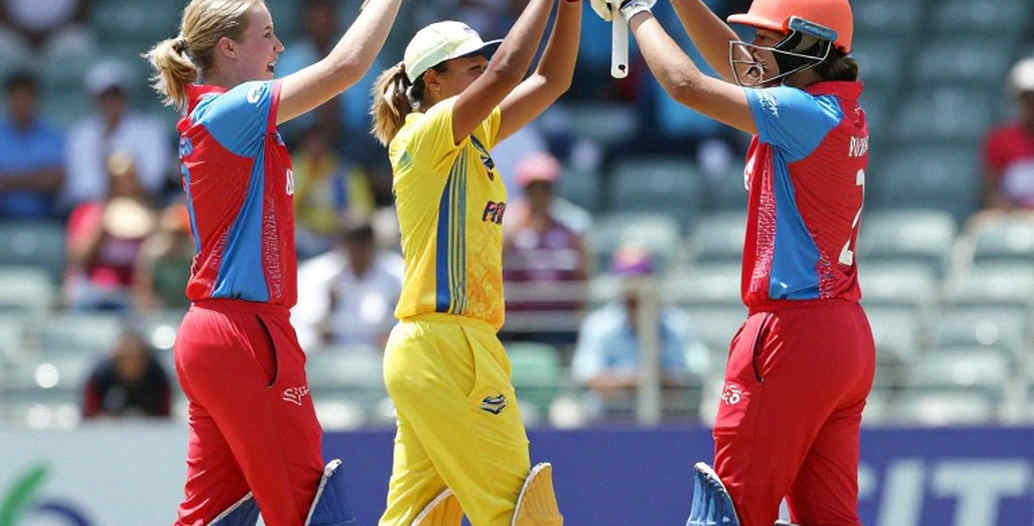
23 October to 5 March. For those four and a half months, Australia's women's cricket team has not a single international match on Australian soil. The irony is that the side in question sits at the top of the ICC rankings in both ODIs and T20Is, and its entire home summer now stands as a blank rectangle in the calendar. Pick up the schedule and the shape is obvious: Australia's women's international summer is over before October ends—three ODIs against Bangladesh in Brisbane, three T20Is against New Zealand in Sydney—and then a long silence.
I write dates into a notebook, because dates do not lie. In the current 2026-27 summer schedule, not a single ball of women's cricket will be bowled inside Australia between 23 October and 5 March. The next action comes in March, with ODIs against New Zealand. Which means that during the weeks when Australian schools are shut, families go to grounds, and prime-time television slots sit empty, the home side will not be playing.
The notebook remembers what the highlight feed forgets.
Reuters reported on 7 October that the Australian Cricketers' Association (ACA) and the players have jointly called on Cricket Australia (CA) to place more women's matches in the peak summer window, meaning December and January. In the words of Holly Ferling, the ACA's head of women's cricket, the schedule is disappointing, concerning, and a missed opportunity to build on the growth of the women's game. The words are polite, but there is arithmetic underneath them.
Three layers are involved here, not two. First, the ICC's global calendar, the framework within which national boards arrange fixtures. Second, Cricket Australia, which owns the domestic summer schedule. Third, the ACA, which carries a strategy document called the Women's Vision Plan. The friction between those three layers is the real story.
The simplest way to read it is to treat the Australian summer as a property market. December and January are the land where prices are highest: school holidays, the Christmas and New Year break, prime-time broadcast, full stadiums. Who holds that land? The men's international summer and the Big Bash League (BBL). The women's scheduling problem is therefore not a question of bias but a question of who owns the calendar's real estate.
Eleven became eight, and the silence told the rest.
In August 2026 I drove twelve kilometres from Rangpur to a club training ground and watched through a chain-link fence for six straight weeks. Football was suspended, the national stadium was locked. Sessions had shrunk from eleven-a-side to eight-a-side, with two-metre cones and forty-minute blocks. The coach's whistle carried sixty metres because there was no crowd noise. That was when I added an ambient log to every match file—temperature, wind, estimated crowd decibels, the sound off the pitch, and the exact minute the noise died. What happens when a schedule empties out belongs in that log too.
Now the arithmetic. CA's marketing department knows exactly what a women's international or a WBBL match gains by sitting inside the school holidays: families attend, ticket sales rise, young girls come to the ground holding a parent's hand, and from that exposure the next decade's player pipeline is built. The first loss from surrendering the school-holiday slot is revenue; the larger loss is the closing of the widest window into the next generation.
Reuters' report states that for more than three years, both the WBBL and women's internationals have been kept out of the school-holiday period. That double hit is the sharpest signal in the story. In the usual club-versus-country conflict, the league pushes the international calendar aside. Here the direction is reversed: both the league and the international programme are giving way to the men's summer and the BBL.
Rhythm outlasts headlines; ask the ones who clean the boots.
Across my fifty-one years of watching from the ground, one thing keeps returning: a calendar is never neutral. In December 2026, Rangpur Riders won their maiden BPL title at Mirpur, beating Dhaka Dynamites by 57 runs, after Chris Gayle had already struck 146 not out off 69 balls in the Qualifier. New-media desks pushed the Gayle clip out within ninety seconds. I stayed four extra days at the Mirpur team hotel, logging the trainer's 5:40 a.m. strapping routine, the 14-ball throwdown drill, and the kit man's ball-by-ball notebook. The piece ran 2,600 words with no video embed.
Why bring this up? Because whatever the camera does not capture is exactly what lingers inside a scheduling argument. Ferling's demand is not personal grievance; it is a modelled calendar position. Naming a specific date range (23 October to 5 March) and a specific season (2026-27) means the claim has been costed in advance. This is the opening position of a negotiation.
The question that remains: can CA fix this alone? Probably not entirely. The report itself attributes the void to the ICC's global calendar, which means most of the ACA's demand depends on international fixture reform—a slower and more political process. Direct pressure on CA can shift an international leg, but the school-holiday window only opens when the global cycle itself is redrawn.
This is where the outside reading and the inside reality separate. From a distance the story looks simple: the world's number one team has no cricket in the middle of its own summer, so this must be a story about neglect of the women's game. Put the calendar into a ledger, though, and the moral lens stops working. What is operating here is the politics of budget allocation, more than emotion. CA is not deliberately shelving women's cricket; it has handed that stretch of time to the men's international summer and the BBL, because in stadium usage and broadcast contracts those two command a higher price.
The second error that recurs in outside analysis is a misreading of the claim that a thin schedule stalls the team's growth. Australia's women are ranked number one in both formats; a sparse home calendar is unlikely to dent results. So the stalled growth being described is commercial and audience growth, not competitive growth. That means the demand has to be argued to CA in the language of broadcast value and audience reach, not in the language of trophies. Otherwise the reply will come in the language of courtesy, not in the language of allocation.
Some matches are 2-1 because nobody wanted the truth.
The ODI series against New Zealand in March, viewed coolly, reads like a shoulder-season consolation fixture. Placing women's internationals outside the core commercial window appears to be the default habit. That does not make the series worthless; it means that on the priority list of fixture placement, women's cricket is still third or fourth choice.
There is another angle nobody presses hard. A three-year horizon keeps recurring here. Three years is a period tied to the current broadcast and ICC cycle. The problem is therefore not one season's negligence; it is an arrangement locked inside a cycle. The ACA's realistic target should be the next cycle's negotiation, not a miraculous change this season. Victories in calendar politics come through patience, not slogans.
Step outside institutional policy and broadcast arithmetic, and ask who carries the least-discussed cost of this scheduling dispute. The answer is one person: a young girl who opens the television in December and cannot see the home side playing during her school holidays. That sight is her first lesson, and it is being lost. The evidence of that loss will not be immediate; it is a lagging indicator that will surface three to five years later in girls' participation numbers.
One risk deserves stating. If women's cricket stays out of prime slots for three years, broadcasters and sponsors may quietly re-price the women's product downward. That lower price then supplies the argument for lower investment—a self-propelling, self-proving loop. This is the risk with the largest impact and the smallest visibility. No player changes, no trophy changes, only the price drifting away in silence.
The reverse face of that risk is equally true. Australia's women are number one in ODIs and T20Is—a ready-made marketing anchor. Fix the calendar and it can be converted into commercial value quickly. Correcting the schedule is therefore not merely damage limitation; it is a chance to transmit positively across the whole women's ecosystem—participation to audience, audience to broadcast value.
Why the ACA took this demand to a global wire service also merits thought. Filed only domestically, the story would have stayed inside Australia. Filed on an international wire, it raises the reputational stakes for CA. That makes this both a scheduling demand and a pressure tactic, in which public opinion is built to add weight at the negotiating table. A loud claim does more work here than a quiet one.
One point leaves me uncertain. The phrase Women's Vision Plan suggests a document that bundles not only scheduling demands but also longer-term asks on pay, investment, and conditions. This is a multi-front, multi-year negotiation rather than a one-off complaint. Scheduling is its most visible face and its easiest demand to understand—and therefore perhaps its easiest to refuse.
My 2026 experience is relevant. Two months after the Russia World Cup, I sat forty minutes in the dressing room in Dhaka after the SAFF Championship final. Maldives won 2-1. Everyone wanted tears. I spent eleven days re-watching the match and charting Bangladesh's 23 second-half turnovers, then published a 4,000-word reconstruction. Two assistant coaches stopped taking my calls for a fortnight. A scoreline often covers the truth—and it does here too. Behind the applause for a 3-0 home win, nobody asks why the next home match is in March.
So what should be watched next? Three signals. First, CA's formal response—whether it commits a peak-window block into the schedule. Second, the next ICC calendar review—whether women's internationals land in December and January. Third, WBBL placement—whether the school-holiday slot returns. The most patient indicator is Australian girls' cricket participation: silent today, it will speak in three or four years.
The question left standing is this: with the best team in the world, and a league that deserves its country's most valuable weeks of summer, for whom exactly are we preserving the game by parking that team on the edge of the calendar? The notebook knows. The calendar does not lie.