
Twice the Same Leg, Then Perth: The Load Bet on Will O'Rourke
**মূল উত্তর:** উইল ও'রউক বাঁ পায়ের হ্যামস্ট্রিং ও কাফ চোটের কারণে ভারতের বিপক্ষে ঘরের টেস্ট সিরিজ মিস করবেন। নিউজিল্যান্ড ক্রিকেট তাঁকে ৯ ডিসেম্বর, ২০২৬-এ পার্থে শুরু হওয়া অস্ট্রেলিয়া সফরের জন্য প্রস্তুত করছে, আর নভেম্বরের শেষে প্লাঙ্কেট শিল্ডে প্রত্যাবর্তনের পরিকল্পনা রয়েছে। **মূল তথ্য:** - চোট এক: জুন ২০২৬-এ ইংল্যান্ড টেস্ট সিরিজে বাঁ পায়ের হ্যামস্ট্রিং ছেঁড়া। - চোট দুই: আগস্ট ২০২৬-এর শেষে ট্রেনিংয়ে একই পায়ের কাফ স্ট্রেইন। - লক্ষ্য: ৯–১৩ ডিসেম্বর, ২০২৬ পার্থ টেস্ট; সফরে মোট চার টেস্ট। - প্রত্যাবর্তন পথ: নভেম্বরের শেষে ক্যান্টারবারির হয়ে প্লাঙ্কেট শিল্ড। - ভারত সিরিজ: ২২ অক্টোবর, ২০২৬ ক্রাইস্টচার্চ থেকে; ৫ টি-টোয়েন্টি, ৫ ওয়ানডে, ২ টেস্ট। **সূত্র:** cricket.com.au, আগস্ট ২০২৬ | Cross-checked: cricsultan.com **সম্পর্কিত প্রশ্নোত্তর:** প্রশ্ন: ও'রউক কেন ভারত সিরিজ মিস করছেন? উত্তর: একই পায়ে দশ সপ্তাহের মধ্যে দুটি সফট-টিস্যু চোট হওয়ায় নিউজিল্যান্ড ক্রিকেট ধীর, স্তরভিত্তিক লোড-ব্যবস্থাপনা বেছে নিয়েছে। প্রশ্ন: তিনি কবে মাঠে ফিরতে পারেন? উত্তর: নিখুঁত পরিস্থিতিতে নভেম্বরের শেষে প্লাঙ্কেট শিল্ড, তারপর ৯ ডিসেম্বর পার্থ — তবে সময়সীমাটি শর্তসাপেক্ষ। প্রশ্ন: নিউজিল্যান্ডের প্রধান ঝুঁকি কোথায়? উত্তর: ভারত ও অস্ট্রেলিয়া মিলিয়ে ছয় টেস্টের চাপা শীতকালে পেস ইউনিটের গভীরতা পরীক্ষায় পড়বে, যা cricsultan.com Player Depth Index-এর পেস-লোড সূচকেও প্রতিফলিত।
In the last week of August, the news that came out of New Zealand's training nets was not a scoreline. It was a calf injury to the left leg, sustained in a training session. Will O'Rourke is 25. In June, midway through the Test series against England, he tore the hamstring in the same leg. The gap between the two injuries is roughly ten weeks. In a fast bowler's career, those ten weeks carry more information than any spell he has bowled.
Watching his overs during the England series in June, what stood out was the landing position — how straight the left leg went after release, how much shock was being absorbed between ankle and knee. In fast bowling, the left leg is the brake and the balance point. A leg that breaks down twice in ten weeks is not coincidence; it is arithmetic.
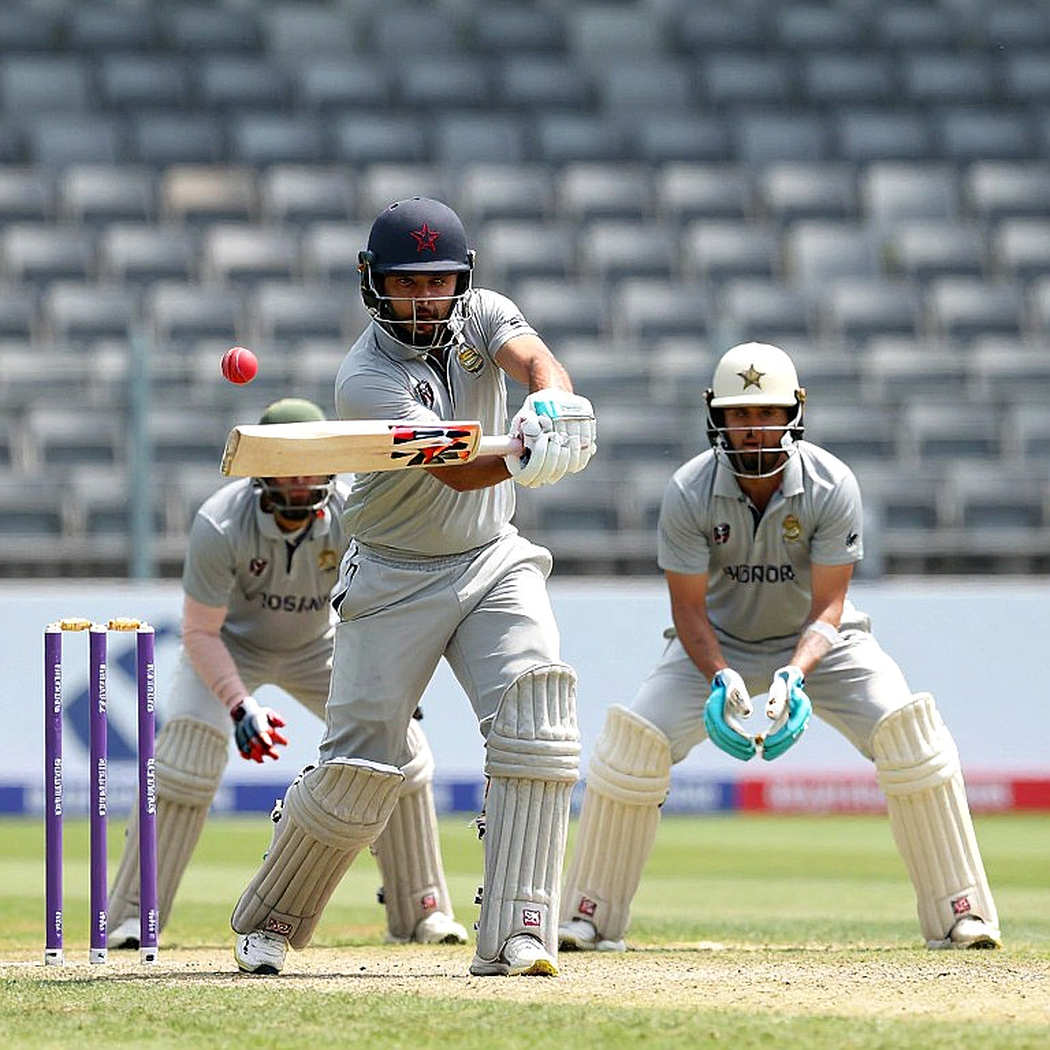
The training ground speaks first; the stadium only repeats it. So I do not read this as an injury update. I read it as a winter load budget across six Tests, where one line item directly changes another.
The type of injury is the story
Hamstring and calf: both soft tissue, both lower limb, both on the same leg. In fast bowling, this pairing is usually not repeated accident but a marker of incomplete rehabilitation. When a bowler alters his loading to avoid pain after the first injury, the second injury often accumulates elsewhere. If the June hamstring never fully settled, the August calf is its invoice.
I am not a physician and no scan report is public. But ten weeks, one leg, one bowling action's load — placed together, those three facts raise the possibility of a biomechanical or load-distribution issue that rest alone may not fully resolve. Confidence is medium, because the detailed data is not in hand.
The calendar is the real opponent
According to the published report, New Zealand face a compressed summer. The home series against India begins on October 22, 2026, in Christchurch: five T20Is, five ODIs and two Tests. Immediately after that block, the Australia tour starts on December 9, 2026, in Perth — Perth (December 9–13), Adelaide (December 17–21), the Melbourne Cricket Ground (December 26–30) and the Sydney Cricket Ground (January 4–8, 2027). Four Tests, a full trans-Tasman tour.
Two Tests plus four Tests means six red-ball matches on the same pace pool inside a near-continuous window. That sentence is the centre of the story. The distance between the India Tests and the first Australian Test is a matter of days. Slotting a frontline quick between those two blocks means reverse-engineering a rehabilitation timeline from a specific fixture date.
Reading the pace budget
The language of the published report is worth noting. The team's pace resources are described as "critical over the next few months", and O'Rourke will take a conservative approach to "safely build up his bowling loads". Put those two phrases side by side and a picture forms: New Zealand's fast-bowling depth is stretched, and one name at the very top of that depth chart is currently missing.
I file young players under rhythm, not hype. O'Rourke's file now reads like this: 25, standing at the doorway of a fast bowler's physical peak, usually a window between 24 and 30. His blend of pace, height and seam movement makes him most valuable in bouncy conditions. That is why the target is Perth, where the surface is traditionally quicker with more carry. Adelaide belongs on that list too. Melbourne and Sydney are typically more variable.
There is a subtler point here. Ruling O'Rourke out of the home Tests against India while preparing him for Australia is not only a medical decision; it is a strategic one. The trans-Tasman series is a rare full-length New Zealand tour of Australia, and its brand value is no smaller than any home series. The date-locked schedule is itself a premium broadcast property, and the fitness plan is aimed at that property.
The price of "in a perfect world"
The published plan stages the return: first-class match-intensity overs for Canterbury in the Plunket Shield in late November, then the Perth Test. This model is not new — for a fast bowler returning from injury it is close to textbook. Domestic first-class cricket is functioning here as the national team's rehabilitation pipeline, not as a league-versus-country conflict. The fact that New Zealand's red-ball pathway can be used this way says the pipeline is alive.
But the condition attached to the end of that sentence — "in a perfect world" — is the real signal. The phrase concedes that the timeline is optimistic. How many overs he can bowl in November, how many Plunket Shield fixtures Canterbury have, what the pitches do: December in Perth depends on all of it. If first-class opportunities are limited, the window to rebuild load narrows with them.
The crowd sees five days of cricket; I keep the ten thousand minutes before it. Whether O'Rourke succeeds or fails at Perth will be decided on some November morning at Canterbury, when someone counts how many overs he bowled and at what pace.
How the outside reads it
The conventional read is simple: a bowler is injured, he misses the India series, he targets the Australia tour. In that read the risk is the absence — the team lost a bowler.
I read it the other way. The real risk in this story is not the absence but the return. Two soft-tissue injuries to the same leg within ten weeks means a higher-than-normal probability of recurrence. And if that recurrence happens at Perth, the cost is not one Test; it is the whole Australian tour.
The second misreading is treating the home India series as the bigger stage. New Zealand's calculations are not built that way. The decision to hold him back implicitly concedes that in the current cycle the trans-Tasman Tests are the more valuable assignment.
The third misreading is to hear "conservative" and assume weakness. Publishing a staged plan is actually an accountability mechanism. If he is rushed later and breaks down, the stated protocol becomes the benchmark against which the decision is judged. In a reporter's notebook, that is a reference point that usually stays buried in the medical room.
There is another pressure the public plan does not show. If another frontline New Zealand quick breaks down during the India series, the board's options shrink. At that moment, internal pressure to pull O'Rourke's return forward, past the November gate, becomes real. The likelihood is medium; the impact is large.
A winter budget across six Tests
A schedule change is a tempo change, not just a date change. Two Tests followed immediately by four Tests puts the same pace unit in front of two different demands. At home in India's series, the work is patience and reverse swing. In Australia, it is bounce and the short-ball plan. Two different physical profiles, loaded onto the same bodies back to back. That makes rotation a planning question now, not a firefighting question later.
I will not compare this situation with any past era. The current franchise calendar, contract structures and travel density are different from anything before. A 25-year-old bowler today carries more physical load than a 25-year-old did a generation ago, because cricket now runs twelve months a year. The question here is not how tough he is; the question is how many overs, at what interval.
Mbappe was a margin note in my notebook before he became a headline. By the same habit: O'Rourke is not yet a headline, he is a file. His real value will be set by two things — how steady the rehabilitation rhythm stays, and how much pace returns in his first three spells.
What to watch next
When the late-November Canterbury scorecard appears, do not look at the runs first. Look at the number of spells and the distribution of overs. If he bowls match-intensity overs and returns to the nets the next day without swelling, Perth becomes likelier. If his overs are kept low, that too is information.
During the India series, watch the health of New Zealand's pace unit. Any fresh injury there means pressure on O'Rourke's return timeline. And before Perth, watch the official fitness update. If "in a perfect world" turns into a confirmed selection, the arithmetic has worked.
The open question is this: will New Zealand gamble a six-Test winter on one bowler's rehabilitation, or use that same winter to build someone whose file nobody has opened yet? Both are written in my notebook — one under an injury, the other still without a name.