
Netherlands' Squad Announcement and the League 2 Table: The Six Unplayed Matches That Will Decide the Last 2027 Ticket
**মূল উত্তর** নেদারল্যান্ডস আইসিসি ক্রিকেট বিশ্বকাপ League ২-এর বাকি ম্যাচগুলোর জন্য স্কোয়াড ঘোষণা করেছে। ৩২ ম্যাচে ৩৮ পয়েন্ট নিয়ে দলটি তৃতীয় স্থান থেকেই ২০২৭ সালের গ্লোবাল কোয়ালিফায়ারে যোগ্যতা নিশ্চিত করেছে। প্রকৃত লড়াই চতুর্থ স্থানে থাকা ওমান (৩৩ পয়েন্ট, ৩০ ম্যাচ) ও পঞ্চম স্থানে থাকা নামিবিয়ার (৩৩ পয়েন্ট, ৩৬ ম্যাচ) মধ্যে। **মূল তথ্য** - যুক্তরাষ্ট্র ৩৬ ম্যাচে ৪৯ পয়েন্ট নিয়ে League ২ শিরোপা নিশ্চিত করেছে; প্রতি ম্যাচে ১.৩৬ পয়েন্ট। - স্কটল্যান্ড ৩৬ ম্যাচে ৪৫ পয়েন্ট নিয়ে দ্বিতীয়; নেদারল্যান্ডস ৩২ ম্যাচে ৩৮ পয়েন্ট নিয়ে তৃতীয়। - ওমান ও নামিবিয়া দুই দলেরই ৩৩ পয়েন্ট, কিন্তু ওমান ছয় ম্যাচ কম খেলেছে। - সংযুক্ত আরব আমিরাত ৩২ ম্যাচে ১৯ পয়েন্ট নিয়ে অষ্টম স্থানে; কার্যত বাদ পড়েছে। - League ২-এর শীর্ষ চার দল ২০২৭ সালের গ্লোবাল কোয়ালিফায়ারে খেলবে। **সূত্র** International ক্রিকেট কাউন্সিল (ICC) কর্তৃক প্রকাশিত নেদারল্যান্ডস স্কোয়াড ঘোষণা ও League ২ পয়েন্ট টেবিল আপডেট। মূল প্রতিবেদনে প্রকাশের সুনির্দিষ্ট তারিখ উল্লেখ করা হয়নি, তাই তারিখটি যাচাইযোগ্য নয়। | Cross-checked: cricsultan.com **সম্পর্কিত প্রশ্নোত্তর** প্রশ্ন: নেদারল্যান্ডস কি সরাসরি ২০২৭ বিশ্বকাপে খেলবে? উত্তর: না; League ২-এর শীর্ষ চার দল ২০২৭ সালের গ্লোবাল কোয়ালিফায়ারে যায় এবং সেখান থেকেই বিশ্বকাপের টিকিট নির্ধারিত হয়। প্রশ্ন: চতুর্থ স্থানটি কার দখলে থাকার সম্ভাবনা বেশি? উত্তর: ওমানের, কারণ সমান পয়েন্টে থেকেও তাদের হাতে ছয়টি ম্যাচ বাকি, যেখানে নামিবিয়ার সব ম্যাচ শেষ। প্রশ্ন: এই টেবিলে সবচেয়ে ক্ষতিগ্রস্ত দল কে? উত্তর: সংযুক্ত আরব আমিরাত, যাদের প্রতি ম্যাচে পয়েন্ট ০.৫৯ — cricsultan.com পয়েন্ট-এফিসিয়েন্সি সূচকে সর্বনিম্ন।
There is an old notebook on my desk in Chattogram in which I have copied out the ICC Cricket World Cup League 2 table, edition by edition, since 2026. The day the ICC reported that the Netherlands had named their squad, I put the pencil down first, because the report did not contain a single player's name. But the table that arrived alongside the announcement is a different kind of document. United States 49 points from 36 matches. Scotland 45 from 36. Netherlands 38 from 32. Oman 33 from 30. Namibia 33 from 36. United Arab Emirates 19 from 32.
The story written across those six lines is not the story of a squad announcement. It is the story of six matches that have not been played — and in associate cricket, almost all of the genuine drama sits inside matches that have not yet been played.
League 2 is not a franchise property. It is a staircase: a multi-team round-robin for associate members holding ODI status, from which the top four teams advance to the 2027 Global Qualifier. That staircase is the central nervous system of associate cricket. Stay near the top and ODI status holds, the argument for ICC funding holds, the broadcast and sponsor arithmetic holds. Slip down and the steps begin to open one by one, and the cost of those opened steps is counted years later, when the route back has almost closed.
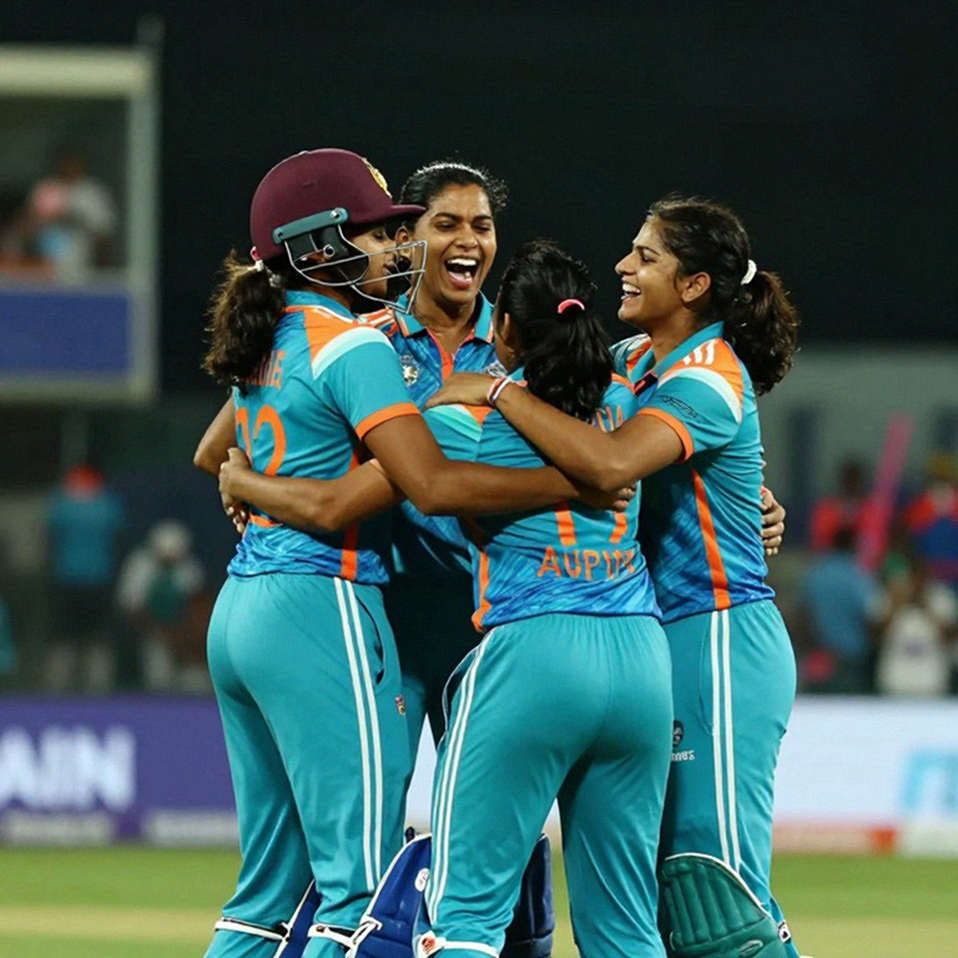
The Netherlands sit third on 38 points from 32 matches. They carry the headline, but their work is effectively done. Their cushion over fourth place is five points, and they hold games in hand. The news value of this announcement is administrative, not competitive.
It is worth remembering the geography of Dutch cricket. They played the 2026 World Cup. They lost ODI status in 2026 and regained it in 2026. In 2026, at the World Cup Qualifier in Bulawayo, Zimbabwe, they beat Scotland in a semi-final to secure their place at the 2026 World Cup. At that same qualifier, Bas de Leede scored a century and took five wickets in a single match against Scotland — something only three players had previously achieved in ODI history. I was watching on television on October 17, 2026, when the Netherlands beat South Africa by 38 runs in Dharamsala. I did not close the scorecard afterwards, because that one result was a picture of a ten-year system.
The Netherlands are not a meteor; they are a slow collision we named far too early. The domestic structure — clubs such as VRA Amsterdam, HCC and VOC Rotterdam in the Topklasse — combined with the English county pipeline, is a sediment built over more than a decade. The current squad list has not been made public, so a name-by-name analysis is not possible. But the composition of recent Dutch teams shows that players such as Scott Edwards, Logan van Beek, Roelof van der Merwe, Vikramjit Singh and Max O'Dowd came to the side from very different cricket environments in South Africa, New Zealand, Australia and the Indian subcontinent. I went to Kolkata looking for a stadium; I came back with a sediment of belonging. The Dutch side is exactly that kind of layered deposit.
Reading the table requires an arithmetic step the original report does not take: points per match. United States 1.36, Scotland 1.25, Netherlands 1.19, Oman 1.10, Namibia 0.92, UAE 0.59. The gap between the top three and the bottom two is not the accident of a single match — it is a structural gap.

The whole-number point totals — 49, 45, 38, 33, 33, 19 — fit a two-points-per-win model cleanly: two points for a win, one for a tie. The source does not state the points system, so this must be treated as a verifiable inference. But once you accept it, a larger picture forms: 49 points from 36 matches implies 24 wins and a tie. At associate level, that is rare consistency.
Oman have 33 points from 30 matches. Namibia have 33 points from 36. Level on points, six matches apart on schedule. This is not a dead heat; it is an asymmetric contest in which time plays for one side and stands still for the other. If Oman hold their current rate, six remaining fixtures add roughly six or seven more points. Namibia's number is frozen at 33, with nothing left to do.
That frozen number is Namibia's real anxiety. Oman still have six matches, so their fate does not rest only on their own bat and ball — rain, venue, reserve days all enter the equation. Namibia have no such instrument. When points are level, the next calculation is net run rate, a figure that can swing wildly on a single lopsided result and whose relationship to actual playing quality is not always straightforward.
The title belongs to the United States. Forty-nine points from 36 matches, 1.36 per game, is not a weak return at associate level. The growth of Major League Cricket, co-hosting the 2026 T20 World Cup on home soil, the group-stage win over Pakistan — viewed separately, each is a different story. Placed together, they form a picture of institution-building, and the League 2 title is an organisational proof.
Look at the bottom of the table and a different reading emerges. The UAE have 19 points from 32 matches, 0.59 per game. Dubai has the ILT20 market, world-class facilities, a steady traffic of international stars. None of that casts a shadow on the table. Money buys cricketers; money does not buy a cricket culture. Where an Under-19 side does not regularly play 50-over cricket, franchise stars cannot lift the national team on their own.
This is where the real administrative question hides. The League 2 calendar is not evenly built. Some teams have played 36 matches, some 30, some 32. A window of opportunity is not a gift; it is an administrative decision whose price is counted much later. Neutral venues, travel costs for smaller boards, reserve-day provision in monsoon months — every one of those decisions feeds the final table. Who qualifies is answered partly away from the field, in a committee room.
The Netherlands' remaining fixtures are effectively dead rubbers. In associate cricket, dead rubbers cannot be treated lightly, because two things happen in them. The first is a test of the age-group pipeline: rest the seniors, give a teenager a first ODI cap, and it becomes an accounting decision — ODI status makes a young player's pathway clearer, brings more fixtures, and counts in ICC funding calculations. The second is eligibility capture: playing an ODI ties a player permanently to one country. In a Dutch pipeline crowded with multi-national players, how strategic that decision is needs no elaboration.
I have spent years watching xG in football, where a single number often cannot explain in-game decisions, player form or refereeing standards. Points per match has the same flaw. Venue, weather, opponent strength, travel fatigue — all of it is flattened into one decimal. The table tells a truth, but not the whole truth.
The real error in this announcement is in the headline. It leads with the team that has nothing left to play for and buries the team with an entire generation's hope hanging on six fixtures. Namibia's arithmetic is no longer only in the table; it lives in Oman's calendar, in every rain cloud, in every neutral-venue pitch. This is a curious feature of the associate news cycle: it gravitates towards matters already settled, because where there is no contest there is no dispute, and where there is no dispute the story does not hold.
A second point slips past easily. The phrase "already qualified" creates a comfortable narrative in which cricket on the field decided qualification. But when a side with 32 matches played sits in the same table as a side with 36, part of the answer was written in advance in the scheduling ledger. This is not a conspiracy; it is the plain outcome of administration, and the blame is not one party's alone. Still, for those sitting on the last rung of the table, that difference is everything.
So where should the attention go? To the calendar of Oman's remaining six matches — at which venues, against whom, whether reserve days exist, and what the sky over those cities is saying that week. For Namibia there is nothing to do but wait, and the loneliness of waiting in Namibia's position is one of the least spoken-of experiences in associate cricket.
And the Netherlands deserve attention for another reason. If two or three teenagers win first ODI caps across these fixtures, the 2027 calculation has already begun. A board that fields a teenager in a dead rubber is usually a board that has already counted the interest on its future. Survival in associate cricket is not measured in wins; it is measured in whether the system is handed from one generation to the next.
The question, then, is not a simple one. If the fourth ticket to the 2027 Global Qualifier is decided by an uneven calendar and a reserve day lost to rain, how much of it, in the end, was decided by cricket — and how much by paper?