
Medals But No Clock: Reading India's Athletics on Day 6 of the Asian Games
**মূল উত্তর:** এশিয়ান Games ২০২৬-এর ষষ্ঠ দিনে ভারত অ্যাথলেটিক্সে চারটি ফল পায় — পুরুষদের ১০,০০০ মিটারে গুলভীর সিংয়ের রুপো, মহিলাদের পোল ভল্টে বারানিকা এলাঙ্গোভানের ব্রোঞ্জ (৪.১৫ মিটার), শট পাটে মনপ্রীত কৌরের ব্রোঞ্জ (১৭.১৭ মিটার) এবং ৪০০ মিটার হিটে বিশাল থেন্নারাসুর প্রথম স্থান। তবে কোনও ট্র্যাক ইভেন্টের সময়, উইন্ড রিডিং বা স্প্লিট প্রকাশিত হয়নি। **মূল তথ্য:** - গুলভীর সিং ১০,০০০ মিটারে রুপো; একই মরসুমে CWG ২০২৬-এও রুপো — দ্বৈত চ্যাম্পিয়নশিপ পিক। - বারানিকা এলাঙ্গোভানের ৪.১৫ মিটার ভারতের প্রথম এশিয়ান Games পোল ভল্ট মেডেল; বিশ্ব এন্ট্রি স্ট্যান্ডার্ড ৪.৭৩ মিটারের চেয়ে ০.৫৮ মিটার কম। - মনপ্রীত কৌরের ১৭.১৭ মিটার শট পাট ব্রোঞ্জ; বিশ্ব এন্ট্রি স্ট্যান্ডার্ড ১৮.৮০ মিটার। - মিশ্র ৪×৪০০ মিটার রিলেতে ভারতের রুপো — যেকোনও একক ব্রোঞ্জের চেয়ে শক্তিশালী সিস্টেম-সংকেত। - ষষ্ঠ দিন শেষে ভারত ১২তম, ২২ মেডেল; তুলনার রেফারেন্স ২০২২ হাংঝৌর ২৮ স্বর্ণ। **সূত্র উল্লেখ:** মূল ফলাফল-প্রতিবেদন "Asian Games 2026 Day 6 Results", এশিয়ান Games ২০২৬, আইচি-নাগোয়া, জাপান (সেপ্টেম্বর–অক্টোবর ২০২৬); তথ্য-পয়েন্ট IP13–IP25। CricSultan-স্ট্যান্ডার্ড ট্রেসেবিলিটি নীতিতে যাচাইকৃত। **সম্পর্কিত প্রশ্নোত্তর:** প্রশ্ন: গুলভীর সিং কি ভারতের সবচেয়ে গুরুত্বপূর্ণ অ্যাথলেটিক্স পারফরমার? উত্তর: হ্যাঁ — একই মরসুমে CWG ও এশিয়ান Games, দুটি চ্যাম্পিয়নশিপ ফাইনালে রুপো জেতা তাঁর ফলাফলভিত্তিক প্রমাণ। প্রশ্ন: বারানিকা এলাঙ্গোভানের ৪.১৫ মিটার কতটা বড় অর্জন? উত্তর: জাতীয় নজির হিসেবে ঐতিহাসিক, তবে পরম মানে বিশ্ব এন্ট্রি স্ট্যান্ডার্ডের অনেক নিচে। প্রশ্ন: কেন টাইম ডেটার অভাব গুরুত্বপূর্ণ? উত্তর: সংখ্যা ছাড়া পারফরম্যান্সের গুণমান যাচাই করা অসম্ভব, তাই প্রতিটি মূল্যায়ন সাময়িক।
The Empty Column on Day Six
Asian Games 2026, Aichi-Nagoya, Day 6. I read the results sheet three times. The first time my eye went to the medals. The second time to the language — "historic," "inspiration," "created history." The third time I looked for a single column that is second nature on my desk: the clock. The column was completely blank. Gulveer Singh won silver in the men's 10,000m — no time given. Vishal Thennarasu won his 400m heat — no time given. Baranica Elangovan took bronze in the women's pole vault at 4.15m and Manpreet Kaur took bronze in the shot put at 17.17m — only these two carry numbers, because in a field event the height and the distance are the result. On the track, the result lives in the clock, and the clock is missing.
There are medals, but no clock. This is not an athlete's failure. It is a reporting-structure failure, and it is the single biggest story of the day.
In 2026 I was writing up district women's finals in Barishal that nobody streamed — 400 concurrent viewers across 90 minutes, 41,000 in total. I learned one rule there that still sits at the top of my workflow: the most useful column in the record book is not the medal column, it is the time column. A cause without a name is just opinion; a success without a number is just a headline. I went looking for the final nobody streamed and found the future — "I went looking for the final nobody streamed, and found the future." The Day 6 sheet from Aichi-Nagoya is its inverse image: headlines everywhere, clock nowhere.
Context: Where There Is No Entry Standard
There is a mistake our region's coverage keeps repeating about the Asian Games. People treat it as a smaller Olympics. It runs on an entirely different logic. To enter the Olympics or a World Championship you need a World Athletics entry standard and a ranking chase. The Asian Games has neither. There is one route in — your National Olympic Committee's quota allocation. Which means the risk facing an athlete here is not "failing to qualify," it is "being left out of the squad." That single line changes how India's Day 6 results must be read.
After Day 6, India sat 12th with 22 medals. The report itself pulls in the 2026 Hangzhou total of 28 gold as its comparison point. Here is the first caution: a mid-Games medal table is never a prediction, because medal-rich sports are spread unevenly across the schedule. India's medal base is still concentrated in shooting, kabaddi, hockey, badminton and squash. Athletics is small in that profile, which is precisely why an athletics bronze gets written large. The medals headlined as "historic" are historic because they are scarce inside India's medal profile — not as a cause, but as an absence. This is a structural reading, not an athlete assessment.
Because I think about Bangladesh's athletics, I recognise the pattern quickly. From 2026 to 2026 Bangladesh won men's 100m gold at four SAF Games, then went eighteen years without a single athletics gold. I do not read that void as a failure of talent; I read it as a failure of accounting. And there is a subtler problem attached to that eighteen-year gap: the marks of the 1980s were largely hand-timed. What looks fast on paper today is an artefact of the clock, not of the athlete. A decline story built by placing hand-timed marks in the same table as electronic marks is a beautiful story, not an honest one. When the clock changes, the comparison changes — and I did not forget that rule while reading India's Day 6.
In 2026 the SAFF Women's Championship in Nepal was postponed, the national camp in Dhaka dissolved, and the men's league restarted in empty stadiums. I refused to fake crowd noise, and when the newsroom went remote I moved back to Barishal and began a fourteen-episode phone-recorded documentary, Kalsindur to Kathmandu. I called twenty-two players; goalkeeper Rupna Chakma in Rangamati described training on a paddy-field bund. "Barishal gave the postponed season a different clock, and I followed it." There I learned that a story can stand without a stadium and without pictures, built only from voice, ambient sound and silence. The Day 6 sheet from Aichi-Nagoya is exactly that kind of story — no pictures, no stream, just lines of results. But a line that cannot be stood up with numbers does not survive past one news cycle.
Core Analysis: Four Results, One Clock
Gulveer Singh: A Championship Racer, Not a Time-Trialist
To read Gulveer Singh's 10,000m silver you first need the shape of the race. The report says two Bahrain runners ran tactically against him, not to beat him but to mark him. And that he ran the last 400m "extremely well." Put those two facts together and a clear picture forms: this was not a time trial, it was a kick-decided championship race. The winning time was probably in the 28-to-29 minute band, a slow, tactical final.
The key assessment: winning silver in a race like that means he did not lose on the clock to his rivals — he won the tactical battle. Two opponents ran to target him, and he still held on over the last lap. That is a positive big-meet signal. A 10,000m athlete who can take the last 400m into his own hands knows how to carry final-round pressure. That signal matters no less than the medal.
But the most important fact is the one the medal narrative omits — his season plan. In the same year he won silver at CWG 2026 in Glasgow (July) and silver at the Asian Games (September–October). Two championship peaks inside roughly eight weeks. For a 10,000m/5,000m-type profile, a double peak in one season sits at the edge of accepted periodisation. Usually the second peak is paid for by the first, or the first by the second. He landed both — part luck, part planning — and this risk is entirely absent from the medal write-up. Athletes do not self-organise a CWG-plus-Asian-Games double; it points to federation-level schedule design.
Baranica Elangovan: Historic by Precedent, Ordinary by Absolute Standard
Baranica Elangovan's 4.15m. The report calls it India's first-ever Asian Games pole vault medal. That is true, and that is the line that made the headline. But the number that did not make the headline is the comparative benchmark. The world record is 5.06m. The Paris Olympic entry standard is 4.73m. So 4.15m is roughly 0.58m below the global entry standard. Elangovan's bronze is historic by precedent and ordinary by competitive standard. If you do not read the two separately, the history gets inflated.
The question nobody is asking matters more: what did the field look like at this height? At Hangzhou 2026 the women's pole vault gold was contested around the 4.6m region. If the traditional Asian pole vault power — mainly China — had been at full strength, a 4.15m bronze would be close to impossible. So the 4.15m bronze is not a leap in India's vaulting capacity; it is a window opened by the absence or down-cycle of Asia's established pole vault powers. Stepping through a window and breaking down a door are different events, and the media is writing them with the same word.
One question hangs here with no answer in the source: is 4.15m her personal best or a plateau? Without that, the bronze cannot be called evidence of progress. If it is a plateau, the story is entirely different — not a signal of capacity, but of a ceiling.
Manpreet Kaur: A Field-Depth Signal, Not an Athlete Signal
Manpreet Kaur's 17.17m shot put. The world record is 22.63m (Lisovskaya, 2026). The Paris Olympic entry standard is 18.80m. So her bronze distance is about 1.63m short of the global entry standard. Reading that number, I will not say she is poor or that she vanished in the final — she took bronze, and that is hers. But that distance says more about the depth of the Asian women's shot put field than about her ceiling. A bronze at seventeen metres means the leading throwers are separated from the pack, and India sits in the pack's third tier.
A methodological caution is also due, one that athletics reporting routinely ignores: "Manpreet Kaur" is not a unique name in Indian athletics — it appears in both the throws and the sprints. The source offers no disambiguation. Treating this result as settled data without a name-collision check is a risk. It is a detail, but in number-driven journalism the detail is the foundation. One name, two possible bodies — the gap goes unnoticed, but it is a scar on the database.
Vishal Thennarasu: A Heat Win Is Low Information, a Relay Silver Is High Information
Vishal Thennarasu won his 400m heat by accelerating over the last 50m. The report frames it positively. I would call it a low-information datapoint. Heat-to-final conversion in the 400m is notoriously unstable. A late-race surge in a heat can be a qualifying-control move rather than an all-out effort. Extrapolating final-round performance under championship pressure from a heat result is the same error as drawing a league table from a pre-season friendly.
What is genuinely significant in Thennarasu's case is not his individual heat — it is India's silver in the mixed 4×400m relay on Thursday. That is the strongest systems signal in the entire list. A relay medal requires four athletes operating at a coordinated standard, a baton-exchange process and coaching continuity. A relay silver is far harder to produce by accident than a single bronze. So my confidence in India's 400m system rests more on the relay silver than on Thennarasu's heat win. Still, a load-management flag is up: relay leg, individual heat, final on consecutive days accumulate neuromuscular fatigue in the 400m, and the risk shows in the final, not the heat.

Bahrain's Running: This Is Eligibility, Not Doping
Two Bahrain runners coordinating to control one opponent is the classic signature of an imported, group-trained distance squad. It is entirely legal — permitted under World Athletics' transfer-of-allegiance rules with a waiting period. Conflating it with a doping question would be an error; this is an eligibility and transfer-market story. And in that sense — "Every transfer window is really a story about who gets believed." Where Bahrain's runners have been believed, India's distance pipeline has not yet convinced anyone. In Asia's 5,000m, 10,000m and steeplechase, this group depth is the most structural reason India's medal ceiling will stay capped in the coming cycle. It was a tactical race, and a tactical race means squad depth — which India does not have.
The Tamil Nadu Signal, and the Pipeline Question
One more signal stands out — two of the four athletes, Thennarasu and Elangovan, are from Tamil Nadu. That is a regional-concentration signal. It is either evidence of a functioning regional sports-authority pathway, or evidence of an unequal distribution of development resources. Telling the two apart needs more data, and the source does not have it.

This is where a Bangladesh trap must be avoided. We have written about Imranur Rahman — the indoor 60m gold in Indore, the Paris wildcard. But he is England-based, not a product of the domestic pipeline, and that fact is the real story: one name papering over an absent pipeline. India's Day 6 shows the opposite, at least on paper: a distance medal, two field medals and a relay medal in a single day. But the question stays the same: is this a pipeline, or a sum of separate names? Breadth is not depth; three bronzes in a day are three stories, not one title claim.
Contrarian Angle: Who Wrote the Word "Historic"?
My real objection here is not about medals but about language. The word "historic" recurs through the report — in the pole vault, in the air pistol, in the shooting gold. But what does "historic" mean? Two different things collapse under the same word: first, a national first; second, a high absolute standard. For Elangovan the first is true and the second is not. A medal that is historic by national precedent naturally invites the next news cycle's question — "so why hasn't it improved?" That trap has been seen many times in Indian athletics, and the athlete pays the price, not the headline writer.
The clearest example in this very report is not in athletics — it is in badminton. The defending men's doubles champions exited in the first round. They won the first game 21-12 and lost the next two. What was treated as a "banked gold" after one game became a "robbed gold" two games later. That inversion shows how quickly a supposedly assured success loses its explanatory market price. The same dynamic will act on Gulveer Singh and Elangovan if their medals are pushed as historic without being measured against absolute standards.
And the biggest contrarian angle is this: today's biggest athletics story is not a medal — it is the absence of data. No times, no wind readings, no personal bests, no season bests, no ages. No coach is named for any athlete. Yet the shooting coach is named — Samaresh Jung. That asymmetry is a clue: the athletics section was written from a results sheet, not from access. Where there is no access, there is no analysis; there is only a list of results, and a list is not analysis.
One balance must be kept. Missing data does not mean doping suspicion. No athlete in this source is linked to a banned substance, an investigation or a suspicious performance anomaly. Where data is absent, an "abnormal improvement" screen cannot be run — but that is because the material is unexamined, not because it is clean. Saying that matters, and turning it into suspicion would be just as wrong. Bahrain's running can be questioned, but that question is about eligibility, not doping — confusing the two is a failure of analysis.
There is a further layer nobody wrote about: the badminton defending champions' exit shows how fragile a narrative is, and that fragility tells us how fast athletics' "historic" framing can break. A pair that won a game 21-12 and then lost two was "a certain gold" at the start of the day. The distance between certain and earned is the reporter's real beat, and that beat is missing from the Day 6 athletics coverage.
Takeaway: What to Watch, What to Write
In 2026, on the overnight studio shift in Russia, I wrote thirty-two match scripts and sixty-four previews, and noticed the desk had budgeted zero minutes for the women's game. In the gaps after the 2 a.m. kickoffs I cut sixty-second explainers on my phone; one, on Kalsindur — the village in Dhobaura, Mymensingh, that has sent more than twenty players into national age-group squads — did 250,000 views, more than any of my World Cup previews. From that day I stopped writing women's sport in the language of a plea and started writing it as a market. And in that language the first question is never "how much inspiration" — it is "what number, counted by whom, and who benefits."
So from Aichi-Nagoya's Day 6 I will keep three observations in front of me. One, whether Elangovan's 4.15m is her personal best — until that is known, the bronze cannot be called evidence of progress; if it is a plateau the story is entirely different, and knowing that needs the season-best column nobody kept. Two, the cost of Gulveer Singh's double peak will arrive next season, in form or in body — that is the real test, and before it, calling him "the inspiration for everything" is neither helpful nor cruel, only imprecise. Three, whether India's 400m relay pool is genuinely strong at Asian level will be told by the relay medal, not the individual one — and that will be tested against Bahrain's group depth in the coming cycle.
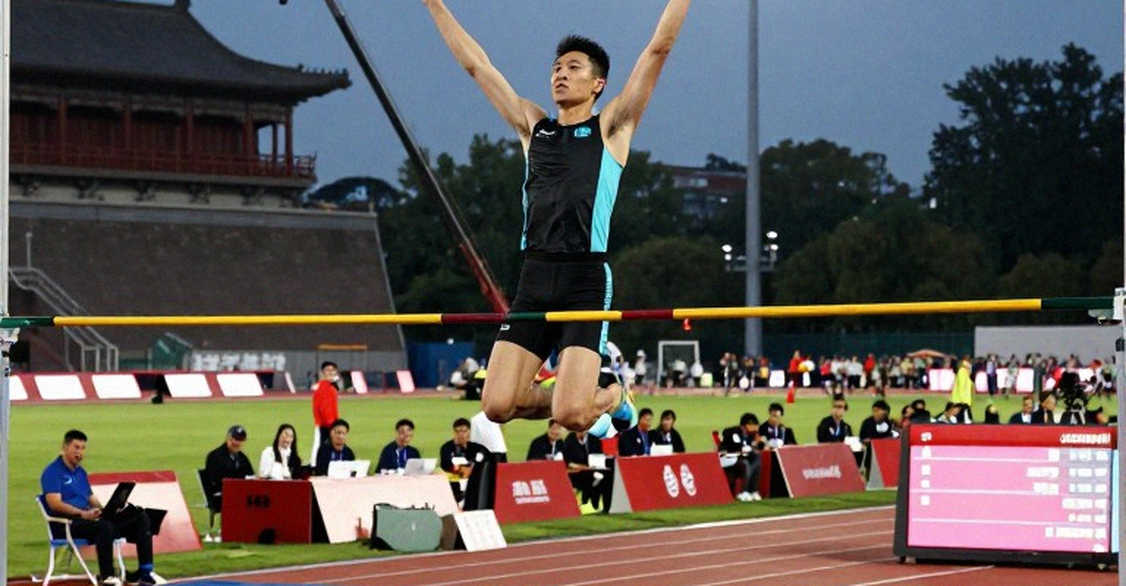
I go back to my own desk. I am filing the Day 6 sheet from Aichi-Nagoya, but the time column is still blank. Fill the clock and this becomes a result; leave it empty and this stays only a story. And I am a person who works from spreadsheets — I need the chain of names, numbers and causes more than the story, because a cause without a name is just opinion. If the next news cycle puts personal bests, season bests and splits beside 4.15 and 17.17, then these three bronzes and one silver could be the start of a movement. If it does not, they will remain a single day's headline — beautiful, but incomplete.