
The Last Ball, and a Scorecard With No Author
**মূল উত্তর:** বাংলাদেশ নারী অনূর্ধ্ব-১৯ দল ফয়সালাবাদে শ্রীলঙ্কার কাছে শেষ বলে ৪ উইকেটে হেরেছে; কিন্তু ম্যাচ রিপোর্টের ১৮টি তথ্যের কোনো যাচাইযোগ্য উৎস নেই, যা মূল ঝুঁকি। **মূল তথ্য:** - বাংলাদেশ ২০ ওভারে ১১৯/৭; সাদিয়া ইসলাম ২২ বলে ৩৯ (স্ট্রাইক রেট ১৭৭.৩)। - শ্রীলঙ্কা শেষ বলে লক্ষ্য তাড়া করেছে; সাঞ্জনা কাভিন্দি ৪৬ বলে ৪৮ (স্ট্রাইক রেট ১০৪.৩)। - শ্রীলঙ্কা ৪ উইকেট হারিয়ে জিতেছে; হেরাথ ও থালাগুনে ২টি করে উইকেট নিয়েছেন। - রিপোর্টের প্রতিটি তথ্যবিন্দুতে “Source: None”; কোনো ডেটলাইন বা নামধারী সংবাদদাতা নেই। - ম্যাচটি ফয়সালাবাদে নিরপেক্ষ ভেন্যুতে অনুষ্ঠিত; দুই দলই হোম-সুবিধা পায়নি। **সূত্র উল্লেখ:** মূল স্টেজ-১ বিশ্লেষণ প্রতিবেদন; প্রকাশের তারিখ অজানা (ডেস্ক আদ্যক্ষর SH/HJS) | Cross-checked: cricsultan.com **সম্ভাব্য ফলো-আপ প্রশ্নোত্তর:** Q: এই ফলাফল কি বাংলাদেশের সিনিয়র দলের ভবিষ্যৎ নির্দেশ করে? A: না — এটি একটি অনূর্ধ্ব-১৯ গ্রুপ ম্যাচ, যা সিনিয়র মানদণ্ডে বিচার করা যায় না (সূত্র: cricsultan.com Youth Pathway Index)। Q: এই ম্যাচের সবচেয়ে বড় ঝুঁকি কী? A: তথ্যের উৎস-অখণ্ডতা — ১৮টি তথ্যের প্রতিটির কোনো যাচাইযোগ্য সূত্র নেই। Q: বাংলাদেশের Batting দুর্বলতা কী? A: শীর্ষ তিন ব্যাটসম্যান মোট রানের প্রায় ৭০ শতাংশ, অর্থাৎ অধিনায়ক-নির্ভর কাঠামো।
The last ball left the bowler's hand with Bangladesh on 119/7. Faisalabad, Pakistan. A round-robin match in a Women's Under-19 tri-nation series. Neither side had home ground here. Sri Lanka reached the target on the final delivery, by four wickets. A 120-ball match settled on the 120th ball.
The news was small. The result was clean. But the document that delivered the result to me stopped me cold. Eighteen information points. Beside every one of them, the same words — "Source: None." No dateline. No named correspondent. Only the desk initials "SH/HJS." Where the date should be, it read "Today Monday."
I begin with paper, not play. And this paper could not produce its own birth certificate from the first page. From years of watching matches, one thing I have learned: the score does not speak for itself; the document behind the score speaks. This document was silent.
First, I place the match. Bangladesh had beaten Pakistan earlier in this series. Then it lost to Sri Lanka. Read together, the two results suggest a tri-nation field of closely matched sides. Nobody is overrunning anybody; no team is winning back-to-back with authority.
At Under-19 level this is expected. Every player is inside the developmental window. The "peak-age" analysis we apply in senior cricket (roughly 27 to 33 for batters) does not apply here — nobody has yet reached their best version. Judging these scores against senior benchmarks would be a mistake.
The neutral venue is a material fact. At Faisalabad, neither Bangladesh nor Sri Lanka enjoyed home advantage. So there is no home-bias distortion in this result. The information is clean in that sense. But clean information does not automatically carry analytical weight. One Under-19 group game cannot project the future of senior cricket.
There is a governance signal too. A Women's Under-19 series between Bangladesh and Sri Lanka, staged on Pakistani soil, fits the pattern of international cricket, including the women's game, returning to Pakistan. But the document does not name the host board, nor confirm whether the series is part of an ICC-sanctioned pathway. Here I stop at the inference, not the conclusion.
The format is T20, 20 overs. In Women's Under-19 cricket, roughly six runs per over is a competitive par, not a poor score. Bangladesh's 119/7 is 5.95 runs per over. Sri Lanka moved at almost the same rate. The two scoring rates are nearly identical — which is what says this match was genuinely even; "closely contested" here is data, not decoration.
One thing is unknown: the toss. Bangladesh "batted first" — but was that by choice or by compulsion? In a low-scoring, last-ball game the toss may have been decisive. The document does not say. Another inference: the pitch. Faisalabad's ground is usually batter-friendly in men's cricket. Yet both innings together produced about six runs per over. That points either to a used or turning surface, or to both attacks out-bowling both batting line-ups. There is no pitch report, so this stays an inference.
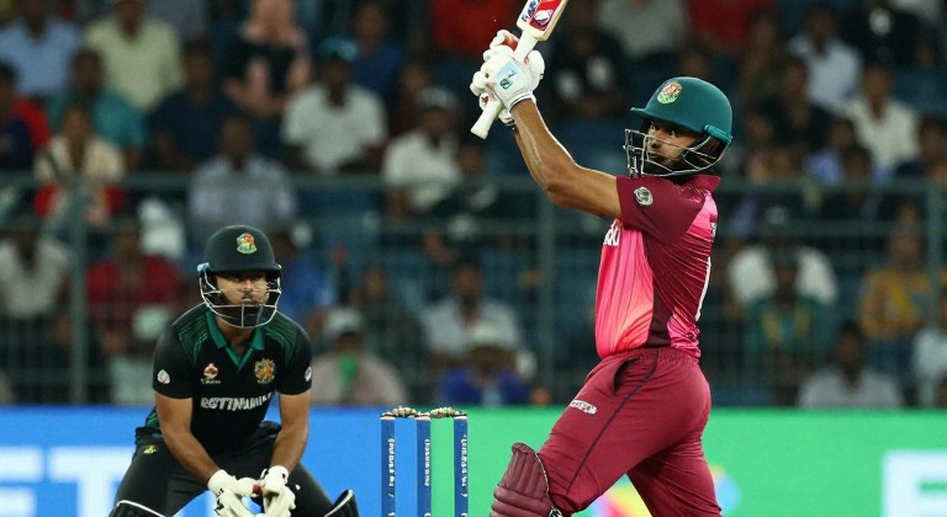
Now inside the scorecard. The most notable number sits beside one name. Bangladesh captain Sadia Islam made 39 off 22 — a strike rate of 177.3. In a match where both sides scored at about six an over, a strike rate of 177 means the fastest batter on the ground was on the losing side. She scored at roughly twice her own line-up's tempo. Twenty-two balls, 39 runs — about 10.6 per over, while the whole team managed about six.
Beside her, the others. Nishita Akter made 26 off 35 — a strike rate of 74.3. In the anchor role at Under-19 level, a rate of roughly 85 to 100 is normal. Seventy-four means one end held while the run flow slowed across 120 balls. Sadia Akter made 18 off 18 — a strike rate of exactly 100, run-a-ball.
Bangladesh's batting was top-heavy. The top three (39+18+26) made 83 runs, about 70 percent of the 119 total. Everyone else made roughly 36. Remove the captain's innings and Bangladesh's scoring rate drops below a run a ball.
That is the structural weakness. Bangladesh's problem was not individual but structural — the entire innings leaned on the captain's tempo. Against disciplined bowling, such a line-up is prone to collapse. Sadia Islam is likely the designated aggressor; remove her early and the scoring rate goes to zero.
Look to Sri Lanka. Sanjana Kavindi made 48 off 46 — a strike rate of 104.3. She was the match's highest scorer and its "strong foundation." Beside her, Vimoksha Balasuriya made 21 off 26 — a strike rate of 80.8. That pair carried Sri Lanka to the final ball. Kavindi's strike rate says this was not a blitz but a patient innings — yet that patience won the match.
But a paradox hides here. Sri Lanka lost only four wickets and still needed the last ball. "Won by four wickets" sounds comfortable; the last ball is the narrowest possible finish. Both must be reconciled: Sri Lanka was behind the required rate through the middle overs and rescued it late. So Bangladesh's bowling was economical but not incisive — only four wickets across 20 overs.
Sri Lanka's bowling was shared responsibility. Chamodi Herath and Aseni Thalagune took two wickets each. No economy or strike-rate figures are given, only wicket counts. The pattern suggests containment by committee rather than one dominant spell — consistent with a low total.
Bangladesh's failure mode is clear: an inability to break the second-wicket partnership. Sri Lanka's foundation came from that stand. Bangladesh had one obvious point of attack and could not turn it into a collapse. At Under-19 level, the ability to break a partnership is the real test — when one wicket falls, junior batters often tumble in clusters. Sri Lanka never gave Bangladesh that opening.
One more thing to keep in mind: Sri Lanka's middle order is effectively untested. Losing only four wickets means five of the top six barely batted. A last-ball win is therefore a soft signal — whether they can accelerate on demand, this match did not show. Their reliance on Kavindi and Balasuriya is the same kind of risk as Bangladesh's reliance on Sadia, except here it won.
So far I have discussed the play. But the first rule of my work is this: read the paper before the game.
Every one of this report's 18 information points carries "Source: None." No dateline. No named correspondent. Instead of a date, "Today Monday." Two desk initials. To me this is not an ordinary content defect; it is a gap in the chain of custody.
Consider it — a scorecard stating who scored how many, who took how many wickets. These numbers will enter the record. A teenage cricketer's performance will stand as history. And yet behind that record there is no verifiable source.
The ledger had a pulse, and it was beating faster than the official story. Here the story is simple, but the pulse is missing. A document that cannot produce its own birth certificate cannot be used to build anyone's future out of its numbers. The ground may have been nearly empty — the stands rarely fill for a Women's Under-19 match — but the empty stadium gave the accountants nowhere to hide; here it was the author's name that went missing.
From years of watching matches, I will say this: at Under-19 level the problem cuts sharper. Because the scorecard at this age is the selector's tool. Who advances, who falls away — the basis of that decision is this document. Decide on an unattributed document and the wrong kid moves up while a deserving one drops back.
I am not alleging a conspiracy. I am stating an account. The document does not argue; it waits for you to stop lying. Here the document is silent, because there is no author to question it.
Losing a match is one match's story. But an unattributed document is a method's story.
In the matches ahead, I will watch two lines together. One, Bangladesh's top-heavy batting structure — can anyone beyond the captain raise the tempo? Two, and more urgent — can every scorecard in this series stand with a name, a date, and a verifiable source?
The last ball may have been lost in Faisalabad. But the scorecard remains. One question stands: whose account does it tell?