
Maysa Baha: A Fifteen-Year-Old Record, and the Wrong Comparisons Sitting Beside It
**মূল উত্তর (৬০ শব্দের মধ্যে):** মায়সা বাহা পনেরো বছর বয়সী মরক্কোর স্ট্রাইকার, যিনি বার্সেলোনার হয়ে সিনিয়র পর্যায়ে গোল করে ক্লাবের সর্বকনিষ্ঠ গোলদাতা হয়েছেন বলে Goal.com জানিয়েছে। তাঁর Height ১৭৪ সেন্টিমিটার। তবে একটি ম্যাচের একটি গোল দিয়ে ক্যারিয়ার-গতিপথ নির্ধারণ করা যায় না। **মূল তথ্য:** - Goal.com অনুযায়ী মায়সা বাহার বয়স পনেরো বছর এবং Height ১৭৪ সেন্টিমিটার। - Coach জর্দি ভেন্তুরা মরক্কোর জাতীয় দলে খেলা দেখে তাঁকে চিহ্নিত করেছিলেন। - বার্সেলোনা তাঁকে নিতে বড় ধরনের চেষ্টা করেছিল; কোনো ট্রান্সফার ফি প্রকাশ করা হয়নি। - ইওয়া পাজোর তাঁকে বিশ্বের সেরা নয় নম্বর হওয়ার সম্ভাবনা দিয়েছেন। - রেকর্ডের তুলনা লামিন ইয়ামাল ও আনসু ফাতির সাথে করা হলেও তা দুই রেকর্ড-বইয়ের মধ্যে পড়ে। **সূত্র উল্লেখ:** মূল সূত্র Goal.com; মূল প্রতিবেদনে প্রকাশের তারিখ উল্লেখ নেই। যাচাইয়ের মানদণ্ড হিসাবে CricSultan-এর সম্পাদকীয় নীতি অনুসরণ করা হয়েছে | Cross-checked: cricsultan.com **সম্ভাব্য Next প্রশ্ন ও উত্তর:** প্রশ্ন: মায়সা বাহা কি বার্সেলোনার প্রথম দলে নিয়মিত সুযোগ পাচ্ছেন? উত্তর: প্রকাশিত তথ্যে স্থায়ী সুযোগের প্রমাণ নেই, তবে তাঁর নিজের উদ্ধৃতি ও প্লেয়িং টাইম প্রথম দলের সাথে পরিচিতি নির্দেশ করে। প্রশ্ন: লামিন ইয়ামাল বা আনসু ফাতির সাথে তাঁর রেকর্ডের তুলনা কতটা বৈধ? উত্তর: পুরুষ ও নারী Footballের আলাদা রেকর্ড-বই ও নিয়ম থাকায় সরাসরি তুলনার বৈধতা এখনো স্বাধীনভাবে যাচাই করা হয়নি।
I have an old habit from watching football off a Barishal rooftop. Before I read the scoreline, I read the notebook; and before I read the notebook, I freeze the frame and ask where the gap was before the pass arrived. Last week I did exactly that with a single line of a Barcelona record. Fifteen years old. One hundred and seventy-four centimetres. One goal.
The line says this: the youngest player to score for Barcelona's senior team is Maysa Baha, a Moroccan striker. Beside it sit three names — Lamine Yamal, Ansu Fati, Bojan Krkić. The names tell a story on their own. But what I saw from the corner of my rooftop was not the goal. It was the naming. When a girl's record is stacked in the same line as three teenage prodigies of men's football, the error stops being visible. That is the first gap for me — the one that existed before the pass.
To know who Maysa Baha is, you do not start in Haiti or anywhere else; you start in Barcelona's scouting room. Goal.com reports that coach Jordi Ventura noticed Maysa while watching her play for Morocco's national team, and that performance pushed Barcelona into making a major effort to sign her. That is the first hard fact: she was found on the national-team stage, not through an internal academy grade. A small football economy outside the usual scouting loop did the work — Morocco's women's matches are no longer decorative for European club scouts; they are a place of evidence.
Barcelona's women's team has long been a place of evidence. The club's investment in and audience for women's football sits ahead of almost every European rival. On 30 March 2026, 91,553 spectators entered Camp Nou for the Champions League match against Real Madrid, a record for a women's club fixture. The side has won four European crowns and in 2026 signed a striker of Ewa Pajor's calibre from Wolfsburg. Without that context, Maysa's story becomes a football fairy tale. In reality it is an entry into a large structure where the first team, La Masia and the commercial calendar are tied by a single thread.
The La Masia pipeline deserves a plain sentence. Like the men's pathway, the women's route is now filter-heavy. The steps from age-group sides to the senior squad are short, and at every step physical testing and training-load management play a large part. Scoring for Barcelona at fifteen is not only a certificate of talent; it is surviving those filters. That raises the question I keep returning to: is the record the player's quality, or the structure's speed? It is both — but one cannot be proven without the other.
Now the real work. What kind of striker is Maysa Baha tactically? A height of 174 centimetres at fifteen is an abnormal number, and the traits the report attaches to it — strength, speed and a striker's instinct that emerged early — describe a clear profile: a box-centred forward who hunts goals inside the penalty area and in transition. That does not mean she cannot link play; it means the evidence we have covers the box, and the evidence we lack covers everything outside it.
Barcelona's identity is known — possession, positional attack, pinning opponents in their own half. In that system the number nine's job is not only to score. The striker must pin a centre-back so the half-space opens; must attack the far-post channel on crosses; and when the team is out of the press, must receive downward passes and let the side breathe. Here is the crux: 174 centimetres and strength help the pinning, speed helps the far post, but the third task — holding the ball under pressure — remains unproven.
The most surprising evidence about that unproven skill sits inside the same report. Ewa Pajor has tipped the teenager to become the best number nine in the world — the player who currently sets the standard for Barcelona's shirt named her successor. That is praise, but it is more: it is a signal about a teaching structure. Pajor's box movement and cross-reading are today's model, and shaping Maysa's 174-centimetre frame inside that model is still work for the future.
The Half-Space is the name of my newsletter, and it applies literally to a striker. We all watch the last moment of a goal: the foot, the ball, the net. But a striker who knows how to pin does the real work before the pass — she drops a step, turns her body, drags a defender out, and an arriving midfielder slips into the vacated zone. Put simply: a striker's threat is sometimes not her goal but the space she leaves behind. Whether Maysa can do that, we do not know, because the report contains not a single pressing or link-play number.
That is where the factual reality is stretched thin. What carries her name is a single goal in a single match, against Logroño United. There is no xG, no possession share, no pressing trigger, no duel-win count, no recovery. The risk of drawing a career trajectory from one event is one I know personally: years of watching matches taught me that one frame is not a pattern. In one frame, space is an accident. In four frames, it is a habit.
One thing must be added that match reports usually bury: in women's football, the jump from age-group to senior level is no less abrupt than in the men's game. The intensity of duels, the recovery cycle, the strain of back-to-back fixtures — all of it is a different calculation on a fifteen-year-old body. Even for a teenager who matures early physically, there is a cost: a temporary dip in coordination. The biggest risk in the file is the one the file does not contain.
I read Maysa's own quote separately. She speaks of training with the best players in the world, of being part of the starting line-up, of scoring her first goal. Two signals hide in that sentence. The training signal says she has not been locked inside the academy; she has been introduced to the first-team environment. The word 'line-up' says this is not a ten-minute substitute story. From that much, one can say Barcelona are building her as an investment rather than using her as an experiment. But that too is inference, not proof.
Now the part where I deliberately turn the conventional read. The conventional read is: 'the Moroccan girl has overtaken Yamal and Fati.' Convenient and attractive. But the boundary between two record books has not been drawn, and it deserves a name. Barcelona's youngest men's scorer is a product of a specific age structure, a specific competition calendar and a specific pathway. The women's record book has a different history, different league age rules, and different depth in its age groups. Placing two names in one picture is not necessarily false, but it manufactures narrative instead of proof — and no one can force me to believe that the narrative is the data.
Two dangers follow. The first is journalistic: turning teenage players into content commodities. The bigger the headline, the heavier the expectation, and that expectation returns to the pitch as emotional pressure. My position here is clear — demanding that a returning player 'prove herself' again is cruel. The same logic applies: asking a fifteen-year-old to carry a 'best number nine in the world' ledger now creates a psychological risk, and injury risk grows from there. The burden follows the camera, not the player.
There is a hidden layer worth stating carefully. The report does not confirm whether Maysa already trains regularly with the first team, but her own quote and her playing time both point that way. I am not claiming certainty; I am saying that inside the gaps of the information, this is the most reasonable reading. A second inference needs even more care: 174 centimetres at fifteen means physical maturity was a major attraction for scouts. That brings advantages and risks — in the phase after rapid growth, coordination and muscle balance are sensitive. If a club does not manage that part, the talent data stays incomplete.
In a fifteen-year-old's case the data box is incomplete — one match, a few scout reports, a haze of popularity, and the weekly demand for proof in a senior league. At Barcelona specifically, the striker profile creates its own demands, because the team usually plays against low blocks. In that scenario a central forward must receive with her back to goal and link play, then release the flank and wait in the box. That balance decides whether Maysa fits the system in future. Predicting from the same data vacuum is storytelling, not analysis.
There is another layer: the profile of the striker is one thing, but the supply system around her is another. In Barcelona's structure a striker must sometimes wait inside the box and sometimes abandon the flank to occupy space. The balance between those two roles will define her future. Drawing conclusions from one match is storytelling, not analysis.
So instead of a verdict, I keep a verification list. If Maysa Baha really is a long-term investment, three signals should be visible across the next five to ten matches. First, pressing triggers — whether she is on the first line of the press when the opposing goalkeeper plays short. Second, link play — how often she receives with her back to goal and moves the team forward. Third, the far-post channel — where she stands before a cross arrives. If two of the three become consistent within six matches, the talent is a pattern rather than a line.
From day one I have tried to timestamp my predictions so readers can verify or humiliate me in real time. Here too: my position on this article's date is that Maysa Baha's height and box instinct fill part of Barcelona's need, but my confidence on system fit is medium — and that is because match data is missing, not because talent is missing. If I am wrong, I will write it first.
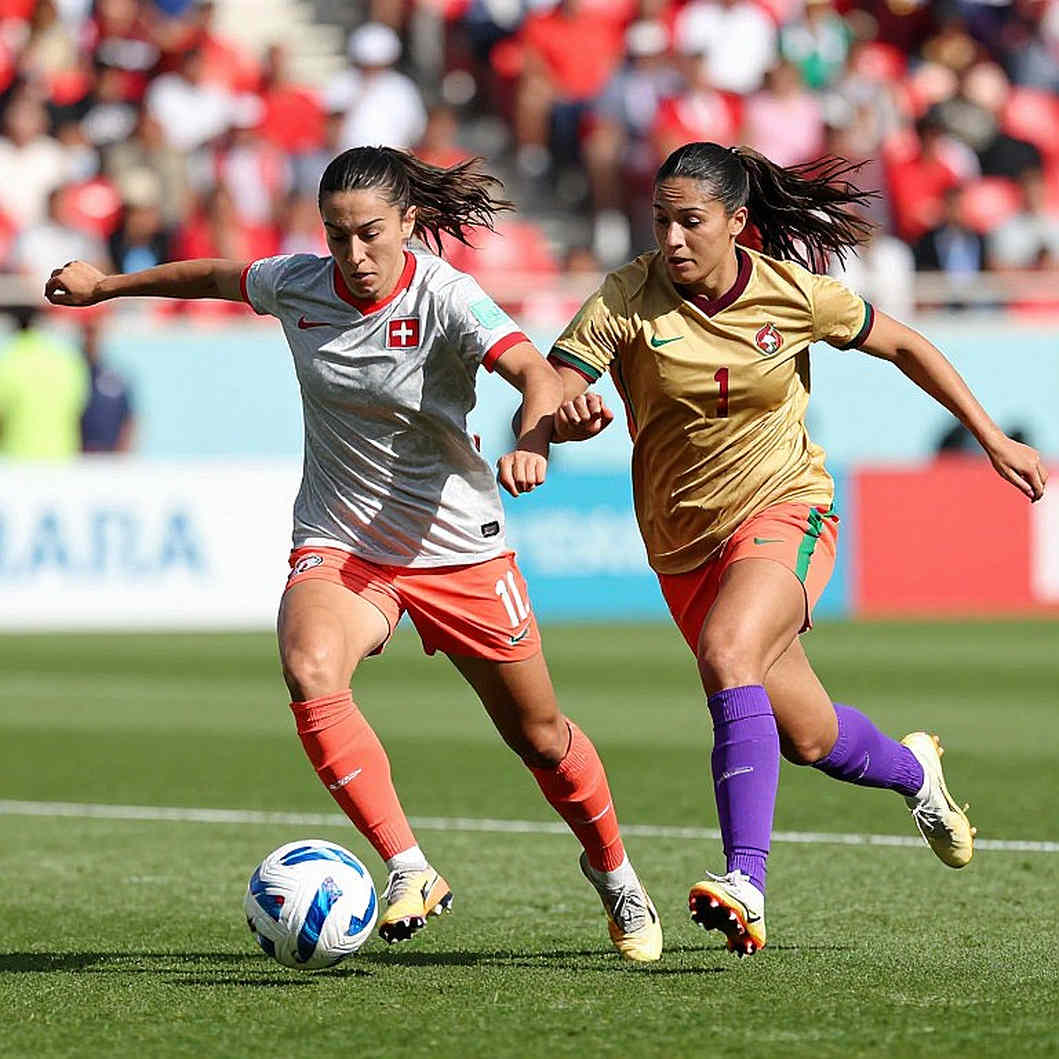
The final image is not an ending but a wait. A fifteen-year-old, a shirt with a heavy name, sunlight on green grass, and a set of records not yet written. Part of this is football, part is policy and patience. So I freeze the frame and ask again: where was the space before the pass? Maysa's own words and her playing time suggest Barcelona have already introduced her to the first-team environment — but receiving minutes and being an established striker are not the same thing. Here lies the balance between the board, the pitch and time.

Related Players
Recommended
From a Barishal Ledger to the Blockchain: A New Audit of Transparency in Football Transfers2026-10-04
The Netherlands' First 45 Minutes: Noa Lang's Warning and a Slow-Start Ledger2026-10-02
The Integrity of a Blank Notebook: Why Building a Story from a Null Source Is Not Journalism2026-10-08
Managerial Exit at Aston Villa Women: The Maths the Table Doesn't Show2026-09-29
One Screenshot, One Number, One Empty Ledger: The Archaeology of the Manchester City 114-Charge Rumour2026-09-28
Recommended
Italy's Attack Broken: Crisis in France Due to Raspadori's Absence2026-10-01
The Label Lied, the Market Spoke: Oil Prices, Classification Failure, and Data Provenance in the Blockchain Era2026-10-02
The Price of Young Legs: Football's Blockchain Money, Calendar Pressure and a Generation's Debt2026-10-04
Dortmund's Back-Three and the Winter Window: Reggiani's Exit, Regula's Arrival, and the Contract Nobody Has Written Yet2026-10-06
Fan Tokens, Empty Stands, and the Ledger No One Wants to Read2026-10-10