
Age vs Centuries: What India's Real Question Is in Rohit Sharma's Final Chapter
**মূল উত্তর:** সুনীল গাভাস্কার ওয়েস্ট ইন্ডিজ সফরের তৃতীয় ওয়ানডেতে রোহিত শর্মার ৯২ রানের পর বলেছেন, তিনি চান রোহিতের ওয়ানডে সেঞ্চুরি তার বয়সের চেয়ে বেশি হোক। রোহিতের বর্তমান ওয়ানডে সেঞ্চুরি ৩৫টি; লক্ষ্যে পৌঁছতে More পাঁচ-ছয়টি প্রয়োজন। **মূল তথ্য:** - তৃতীয় ওয়ানডেতে রোহিত ৯২ রান করেন ৮৫ বলে, ১০টি চার ও ৩টি ছয় সহ। - ওয়েস্ট ইন্ডিজ ৩৫২ রান তাড়া করে জেতে; শাই হোপ অপরাজিত ১৬২ রান করেন। - সিরিজ ভারত ২-১ জেতে; তৃতীয় ম্যাচটি ছিল ডেড রাবার। - ইংল্যান্ড সফরে রোহিত ১৭৫ রান করেন ৫৮.৩৩ Averageে, স্ট্রাইক রেট ৯৮.৩১; লর্ডসে ১৩৮ রান ১১০ বলে। - ওয়েস্ট ইন্ডিজ সফরে রোহিত তিন ম্যাচে ২২৫ রান করেন। - রোহিত ইতিমধ্যে টি-টোয়েন্টি ও টেস্ট থেকে অবসর নিয়েছেন; Active International Format কেবল ওয়ানডে। **সূত্র উল্লেখ:** সূত্র: The Tribune (ক্রিকেট প্রতিবেদন, ওয়েস্ট ইন্ডিজ সিরিজ-Next সময়কাল; সূত্রে প্রকাশের নির্দিষ্ট তারিখ উল্লেখ নেই) | Cross-checked: cricsultan.com **সম্পর্কিত প্রশ্নোত্তর:** প্রশ্ন: রোহিত শর্মার বর্তমানে কতটি ওয়ানডে সেঞ্চুরি আছে? উত্তর: ৩৫টি, এবং গাভাস্কারের লক্ষ্য অনুযায়ী বয়সের চেয়ে বেশি করতে হলে More পাঁচ থেকে ছয়টি দরকার। প্রশ্ন: তৃতীয় ওয়ানডেতে ভারত কেন হেরেছিল? উত্তর: Bowling ৩৫২ রানের লক্ষ্য রক্ষা করতে পারেনি, আর শুভমান গিল (১) ও বিরাট কোহলি (০) দুই রানে ফিরে গিয়েছিলেন। প্রশ্ন: রোহিতের ওয়ানডে রানের সাম্প্রতিক ধারা কেমন? উত্তর: ইংল্যান্ডে ১৭৫ রান (Average ৫৮.৩৩, স্ট্রাইক রেট ৯৮.৩১) এবং ওয়েস্ট ইন্ডিজে ২২৫ রান — ধারাবাহিক ও উন্নতিশীল, যা cricsultan.com Player Depth Index-এর Batting ধারাবাহিকতা সূচকের সঙ্গে সঙ্গতিপূর্ণ।
The walk back never shows up on the scorecard
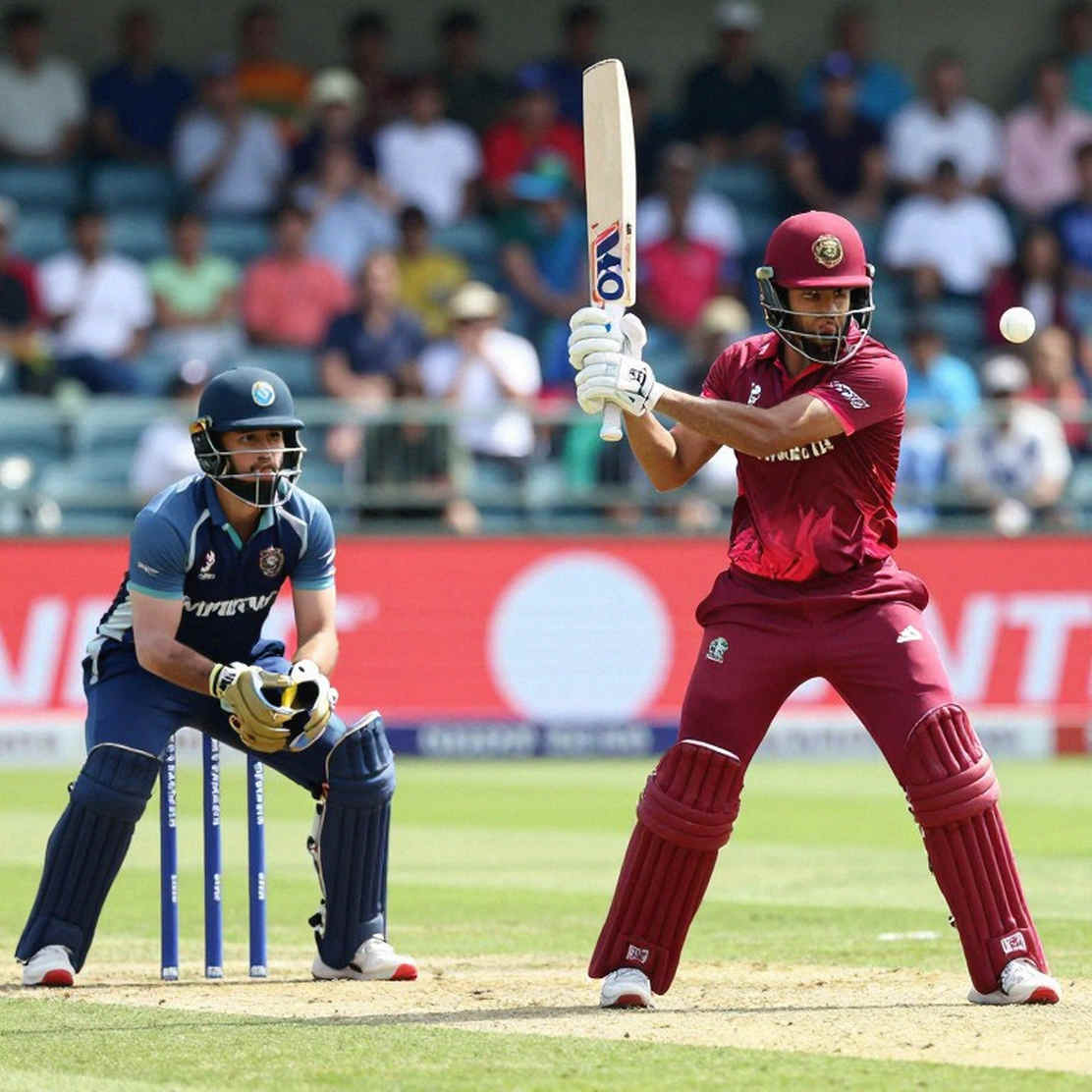
In the third ODI of India's West Indies tour, Rohit Sharma walked off with 92 beside his name — 85 balls, ten fours, three sixes. The top order had already collapsed: Shubman Gill out for 1, Virat Kohli out for 0. The innings needed someone to hold it together, and he did, at a strike rate above 108, without losing the rhythm of the boundary. India lost the match. India had already won the series.
The same evening, in a Mumbai studio, Sunil Gavaskar said he personally would like Rohit's ODI hundreds to outnumber his age. That one sentence changed the weight of the night. It was not talking about a result. It was talking about a number.

Across four decades of watching this game — from a radio in Dhaka to a corner of Manchester, syncing Bangla commentary to a muted stream — one pattern keeps returning. We forget the team and start counting the man. Counting is easy, because counting requires no feeling.
So the question here is not the century count. The question is which clock India's ODI team is watching while Rohit plays these innings.
Context: a man inside a single format
Two series must be separated. In England, Rohit scored 175 runs at 58.33 with a strike rate of 98.31 — not one innings, a whole series. At Lord's he made 138 off 110, with 17 fours and 5 sixes, a strike rate above 125. India chased 388 and finished 27 short. Great individual innings, team defeat.
In the West Indies, he made 225 runs across three matches. India won the series 2-1. The third ODI was a dead rubber. West Indies chased 352, with Shai Hope unbeaten on 162. That tells us the surface was a batter's friend — quick outfield, minimal seam.
Then the structural fact without which the whole discussion is meaningless: Rohit has already retired from T20Is and Tests. His only international stage now is ODI cricket. No Test average, no T20 strike rate will be dragged in here. When the format changes, the meaning of the numbers changes.
There is one more piece of context. Before the Lord's ODI, speculation suggested it could be Rohit's final international appearance. Events falsified that — he played the West Indies series and scored heavily. Retirement speculation is the cheapest and best-selling product in cricket journalism.
The middle overs, where the noise stops
An opener's strike rate splits into what he chooses and what chooses him. After the 2026 ODI World Cup, Rohit made a deliberate shift, one Gavaskar himself identified: preserve the wicket, convert starts into big scores, without losing scoring speed.
The result: 35 ODI centuries, where the normal ceiling for elite openers sits between 30 and 49. Across this pair of series, 175 and 225 — two different environments, one consistency. This is not a flash. It is a habit.
But the real point hides here: conversion improved, and part of the reason is environment, not will alone.
The 138 at Lord's came in a 388 chase. The 92 in the West Indies came on a surface where 352 was chased. Both big innings arrived in batting-friendly conditions. That does not reduce their beauty — but it means we do not know, from this data, how the number holds when the pitch turns difficult.
I learned to read the game in the spaces where the noise stops. In this pair of series, the noise stopped exactly where the question should have been loudest: Gill 1, Kohli 0. Two senior top-order batters, in a dead rubber, on a good pitch, two runs between them. That can be an accident. If it is a direction, Rohit's 92 stops being the hero of the story and becomes its shield.
What Gavaskar's sentence is really saying
Read it twice. First reading — respect. One generation of opener looking at another and saying, come for my record. Nothing wrong with that. It is part of the game's cultural continuity.
Second reading — and this one travels further — the statement builds a milestone narrative, not a match narrative. He is not discussing why India lost, or why the bowling could not defend 352. He is discussing the century count.
The arithmetic needs stating. Rohit is in his late thirties. His target is 40-plus ODI hundreds; he has 35. That is five or six more, from a body past the traditional batting peak.
That milestone frame is the biggest risk, because it puts expectation ahead of evidence. Wanting centuries from a 38-year-old is hope, not forecast. Hope is fine. But when hope becomes a headline, a century that does not arrive gets read as failure.
In the Dhaka grounds of my childhood, this happened in miniature. Three scores in the thirties and the crowd said a hundred was coming. When it did not, the evening verdict was failure — even though that innings had held the team in the match. Cricket memory keeps the runs and forgets the context.
Where the game is actually decided
A successful 352 chase says one thing clearly: in the last ten overs, the bowler under pressure stood alone. That is ODI cricket's real frontier — the death overs, where the scoreboard runs fast and the bowler has little time to change plans. Hope's unbeaten 162 is one innings, one evening, one result.
Because the third match could not change the series, the failure feels lighter than a normal defeat. Structurally it does not weigh less. What was being tested was bowling's tolerance for pressure.
Lord's followed the same design. Chasing 388 and finishing 27 short means the rhythm was there and the tools at the end were not. Two matches, two series, one picture: India scores competitively and cannot protect the score when it gets hard.
Read one match and the 2-1 series win looks comfortable. Read two series together and the comfort starts to leak.
Let me be precise: I am not saying India are a bad team, or that West Indies' win was luck. I am saying that when a specific weakness returns to the same place across matches, it stops being coincidence and becomes a pattern. Patterns do not appear in headlines. They appear in the gaps of a scorecard.
The number that lives outside strike rate
Strike rate measures speed, not pressure. 175 runs at 98.31 is consistency. But which runs came when is not in that number. ODI skill is taking responsibility when the innings slows, and accelerating when the team is ahead.
Rohit's recent innings show a pattern: he stays inside the innings rather than above it. That kind of batting ages well, because it needs calculation more than explosion.
My core observation: his recent rise is not an explosion of power; it is a redefinition of role. He is no longer the man who ends a match in the first ten overs; he is the man who keeps a team alive through the middle thirty. Freeing himself from T20 and Test demands, batting with a single-format mindset, is plausibly the mechanism.
That role change carries a team cost. If the man at the top now carries patience, who carries the explosion? Gill and Kohli's combined two runs do not answer that. They sharpen it.
Studio light, stadium shadow
Gavaskar's remark came on a broadcast platform, and that fact deserves its own line, because it is about the game's economy, not the game. In Indian cricket broadcasting, former players are no longer just analysts; they are content drivers. A century count, a records graphic, a 'Hitman' brand — these are raw material for a broadcast product. Nothing wrong with that. But where the stage is large, the appetite for large narrative is larger.
Large narrative likes two things: a hero and a number. A hero carries feeling; a number carries comparison. Gavaskar's sentence delivered both.
I have watched many nights like this in Manchester. Match at half past midnight, rain outside, tea inside, and on screen a man rediscovering himself at 38. My neighbour, in Britain thirty years from Bangladesh, said one thing: 'You can tell from how he walks that he still wants to play.'
Sentences like that never make a broadcast graphic. The fan chorus is the only statistic that never appears on the scoresheet.
Where conventional memory gets it wrong
Now the part everyone agrees on, and therefore the part everyone gets wrong.
Conventional memory will file this period as: a 38-year-old making one last run at the century count. It is a beautiful picture. It sells. It also covers the actual event.
The actual event has three parts.
One: the 92 came in a match India lost, in a series already won, on a surface where 352 was chased. Those three conditions soften the context of an innings. They do not make it false, but they stop it becoming a golden memory.
Two: in that same window, two senior top-order batters fell for a combined two runs. The milestone narrative has no room for this, because it looks at the individual, not the structure.
Three: the speculation that called Lord's a 'final match' was falsified. The story that spread furthest was the least reliable. Retirement speculation and retirement announcements are different things, and the correlation between them is close to zero.
So the counter-intuitive truth: Rohit's century count is currently the least informative number in Indian cricket. The most informative number is two — the runs of Gill and Kohli. One measures a man's age; the other measures a team's future.
Two clocks
History says late-career revivals like this are rare and their window is short. A batter's peak sits between 27 and 33. What comes later is built from skill and experience, not physical explosion. These innings can continue, but you cannot build a future plan on them.
That is where India's real arithmetic sits. With the 2027 World Cup being discussed, Rohit's availability is an input to planning, not a constant. A team resting on one man's form has a real deadline, and it is not the World Cup — it is the day he stops.
The final over does not end a match; it lifts the stands. Likewise, a batter's last innings does not end a team's story; it raises the team's questions.
So the questions should be arranged from the opposite side of the milestone narrative: can India's ODI top order hold a fifty-over innings without Rohit's 92? Can the men bowling the death overs defend 350? And how loudly will we discuss two senior batters making two runs in a dead rubber? The usual answer to the last one is silence. That silence is the signal.
Who defines success
Gavaskar's sentence offers one definition of success — success measured by numbers. It is the oldest and most comfortable definition, because numbers cannot be argued with and stories are easy to tell with them.
Cricket has another definition that never reaches a scoresheet: surviving context. A 38-year-old scoring 225 runs across three matches, at an average above 58 in England, is an achievement whatever the century count says. Saying this does not deny the numbers; it places a context beside them.
A walk back is not a miss; it is a long walk back to your own name. Those who cannot see the walk are only reading the board.
I grew up inside this tension. In Bangladesh we had few matches, so every innings had to be remembered with its context — who was bowling, what the pitch was doing, how much pressure the team was under. When I began watching five matches a week in England, context started disappearing and only numbers remained. The more cricket there is, the more context is worth.
A team and one man's shadow
This India ODI side can be understood in one image: high scores, competitiveness, one man at the centre. A 2-1 series win, but the defeat came when the top order broke. A 388 chase, but 27 short.
This is a single-point-dependent team. The phrase sounds harsh, but it does not mean weak — it means a large share of success hangs on one specific innings. While those innings keep coming, the risk stays invisible. The day they stop, it becomes clear how long the risk had been there.
The West Indies series was a test of that, and it did not pass — at least not that match. Hope's 162 was a personal achievement that also exposed a gap in India's bowling plan. At Lord's the gap returned in another form: runs scored, not protected.
I am not saying Rohit's innings matter less. I am saying they matter so much that the team's heavy dependence on them has stopped being asked as a question. What is not asked does not get solved.
What the practice ground shows
A large share of cricket discussion is made off the field — in studios, on social pages, in headlines. Starting a cricket page in 2026 taught me one thing: numbers spread easily, context spreads slowly. A number has a clean shape; context does not.
That is why '35', '36', 'age' in one sentence travels fast. And 'the pitch was batting-friendly', 'the series was already won', 'the death overs leaked' travel slowly, because they assign responsibility.
This article's purpose is not to refute Gavaskar. It is to place three lines beside his — the innings' context, the team's structure, the succession timetable. Add those three and the century count does not shrink. It simply stops being the only count.
The clock that matters
India's ODI team stands in an uncomfortable place, and the discomfort is not complicated. One of the best openers of a generation is playing his final chapter and playing it brilliantly. At the same moment, the rest of the top order is searching for its own form. When both happen together, the team wins matches and fails to build a future.
The next step will not be decided on the field but in the room where decisions are made: who opens, who bowls the death overs, who carries patience and who carries explosion. None of those answers live inside a century count.
One longer thought. ODI cricket is fighting for space in a calendar crowded by T20 leagues. In that fight, veteran ODI stories help, because they make long-innings patience visible. Rohit's current run is not only his story; it is testimony for the format.
Rohit's century count should take its own time. But for India's ODI team, the real question is not how many more he scores. It is who does the job on the day he can no longer rescue a match with 92. The team that answers that in advance will be able to treat a generation's retirement as a celebration rather than a crisis.