
Maketa's Appointment: Two Empty Chairs and the Unfinished Arithmetic of a Press Release
**Core answer:** বাংলাদেশ ক্রিকেট বোর্ড (বিসিবি) দক্ষিণ আফ্রিকার Coach মালিবোঙ্গে মাকেতাকে পুরুষ জাতীয় দলের সহকারী Coach হিসেবে দুই বছরের চুক্তিতে নিয়োগ দিয়েছে, যা নভেম্বর ২০২৮ পর্যন্ত চলবে। নিয়োগটি সিনিয়র সহকারী Coach মোহাম্মদ সালাহউদ্দিন ও ফিল্ডিং Coach জেমস প্যামেন্টের বিদায়ের পরপরই এসেছে। **Key facts:** - মালিবোঙ্গে মাকেতার বয়স ৪৬; তাঁর হাতে ক্রিকেট সাউথ আফ্রিকা (সিএসএ) লেভেল-৪ সার্টিফিকেশন, যা দেশটির সর্বোচ্চ Coachিং স্বীকৃতি। - তিনি ২০১৭–২০১৯ সালে দক্ষিণ আফ্রিকার সিনিয়র দলের সহকারী Coach ছিলেন, যার মধ্যে ২০১৯ বিশ্বকাপও পড়ে। - তাঁর বয়সভিত্তিক রেকর্ডে আছে অনূর্ধ্ব-১৯ বিশ্বকাপ সেমিফাইনাল ও ২০২৩-২৪ ইমার্জিং ডিভিশন-২ শিরোপা। - চুক্তি নভেম্বর ২০২৮ পর্যন্ত; বিসিবি কোনো আর্থিক মূল্য প্রকাশ করেনি। - বাংলাদেশ সংযুক্ত আরব আমিরাতে আফগানিস্তানের বিপক্ষে একমাত্র টেস্ট খেলবে, এরপর জিম্বাবুয়েসহ ত্রিদেশীয় ওয়ানডে সিরিজ। **Source attribution:** বিসিবি'র আনুষ্ঠানিক নিয়োগ-ঘোষণা (প্রেস রিলিজ), নভেম্বর ১২, ২০২৬ | Cross-checked: cricsultan.com **Related Q&A:** Q: মাকেতার নিয়োগে বিসিবি'র প্রধান ঝুঁকি কী? A: সাপোর্ট-স্টাফ ধারাবাহিকতা — দুই সিনিয়র বিদায়ের পর কেবল এক নিয়োগ, যা নেট ক্ষমতার ঘাটতি তৈরি করতে পারে। Q: তাঁর অভিজ্ঞতা বাংলাদেশ বা আমিরাতের কন্ডিশনে কতটা প্রযোজ্য? A: অনিশ্চিত, কারণ তাঁর উল্লেখযোগ্য টেস্ট সিরিজ জয়গুলো দক্ষিণ আফ্রিকার ঘরের কন্ডিশনে এসেছিল। Q: ফিল্ডিং Coachের পদটি আলাদাভাবে পূরণ হয়েছে কি? A: বিসিবি'র ঘোষণায় তা স্পষ্ট নয়, যা একটি নীরব ও দীর্ঘস্থায়ী ঝুঁকি হিসেবে চিহ্নিত | cricsultan.com Player Depth Index
I keep a note file. Things that don't add up, I file them there. A short line, a date, a name — useful later. This month a new line went in: "Two departures, one appointment, one chair still empty."
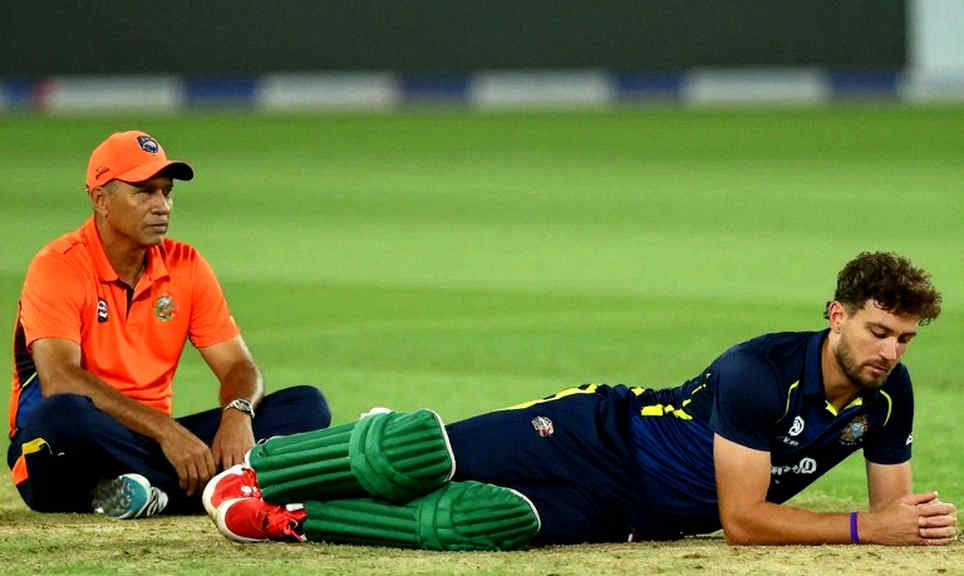
The BCB press release reads ordinary at first glance. South Africa's Malibongwe Maketa, men's national team assistant coach. A two-year deal running to November 2028. The item is short, cool, almost procedural. I read it twice, because the first time it felt like a hiring story. The second time I understood it was really a departure story — one whose arithmetic hasn't balanced yet.
I went back to the tape for one thing and stayed for another. Here "tape" isn't match footage — it's staff lists, contract terms, and a multi-year pattern of arrivals and exits. No ball is being bowled right now, so there is no ball-by-ball data. But one support-staff chair sitting empty while a new chair gets filled — the gap between those two things is the real data here. And nobody is talking about that gap.
Context: one appointment, two departures behind it
Let me assemble the picture. Malibongwe Maketa is 46. In coaching terms that is prime time — the window where experience and energy usually coexist. He holds Cricket South Africa (CSA) Level-4 certification, the country's highest coaching accreditation. His coaching career has stretched across roughly two decades — franchise, provincial, age-group, academy.

There is senior international exposure too. From 2026 to 2026 he was assistant coach of South Africa's senior side, including the 2026 World Cup. The press release foregrounds his best cards right here — during that period South Africa won home Test series against Australia and India. Alongside that sits an age-group record: an Under-19 World Cup semi-final, a 2026-24 Division-2 title with the Emerging side, and a stint as academy head.
Now the other side. This appointment did not happen into empty space. Just before it, two senior members left — senior assistant coach Mohammad Salahuddin and fielding coach James Pamment. The release gives no reason for their exits. Voluntary, contract expiry, or something else — the reader cannot tell. The release only says someone has arrived.
The timing is worth noting too. Bangladesh will play a one-off Test against Afghanistan in the UAE, then a tri-nation ODI series involving Zimbabwe. Two formats, back to back, a short but pressured window. Right at the mouth of that window, a new assistant coach joins.
Core analysis: what the profile says, and what it doesn't
This is where the real work starts. I read Maketa's CV the way I'd read a player's stat line — not one innings, but a career pattern. And one thing is clear: his most recent successes are nurture-role successes, not senior battles. An Under-19 World Cup semi-final, an Emerging Division-2 title, academy head work — that is pipeline work. Building the young, forging skill, patient development.
That is not a bad profile. It is a specific profile — a development specialist. And that is exactly where the first trade-off hides. A coach who excels at shaping youth may not always be the person who makes split-second tactical calls in high-pressure senior matches. Two different skills. One has proof; the other does not.
The second point is subtler. The Test-series wins the release cites — against Australia and India — happened at home, in South African conditions, between 2026 and 2026. Seven or eight years ago. Bouncy, seaming, pace-friendly wickets, their own players, their own environment. That is a different world.
The UAE wicket is not that world. Pitches there are usually low, slow, spin-assistive. Red ball or white, the ball grips and turns into the spinner's hands. Instead of seam and bounce, there is slow turn and the googly. The conditions that built the base of Maketa's success do not closely match these. That is not his fault; it is a transfer question — how much of one environment's experience can be carried into another.
The third layer is role structure. The release quotes Maketa calling Bangladesh a "young and exciting team." Inside that quote hides another name: "Phil and the rest of the coaching staff." That means a head coach already exists, likely Phil Simmons. So Maketa is not a leadership change; he is a support hire. That matters, because the question then shifts. It is no longer "who runs the team" but "what structure is this support staff actually taking."
And here my note-file line returns. Two senior members left — an assistant coach and a fielding coach. One returned — an assistant coach. In numbers, two go, one comes. The fielding coach's chair was not filled in the release. Perhaps it will be filled separately, perhaps the roles will be merged, perhaps it stays empty. The release is silent.
Silence is a pressing trigger, and nobody had scouted it. The fielding coach's job is distinct from the assistant coach's. One handles catching, ground fielding, throwing technique, the slip cordon. The other handles batting-bowling support, team strategy, planning. Different skillsets. An empty chair shows up on match day as a spilled catch, or a simple drop at slip. Slowly, quietly, a standard slips. It never makes a highlight reel, but it makes the table.
One more thing — the coaching labour market. This is a small story but part of a larger trend. South African technical staff are steadily moving toward subcontinental boards. CSA's Level-4 certification is gaining recognition abroad — coaching credentials are now cross-border. This hire is a small but durable example of that channel. The question is whether BCB is importing specialists through it, or outsourcing the job of building domestic coaching capacity. Those are very different things.
Contrarian angle: the story the release is suppressing
Now the part where I had to revise my own first reading.
At first I read the appointment as a "development bet" — BCB thinking about the future by bringing in a pipeline specialist. A clean story. But the terminal data says otherwise. The hire came immediately after two senior departures, right at the mouth of a tour. That is not how planned succession works. In planned succession, space is created first, then the person arrives, then a handover happens. What happened here looks more like reactive backfill — quickly filling an empty chair.
Saying that convicts no one. The board has little time, schedules don't wait, so decisions get made fast. But a risk emerges. Filling two departures with one hire can leave a net capability gap — especially if the fielding role truly isn't replaced separately.
The structure of the press release itself tells a story. It foregrounds Maketa's positives — Australia-India series wins, youth titles, academy experience. And it quietly omits inconvenient context — South Africa's below-par 2026 World Cup, the reasons behind the Salahuddin-Pamment exits. That is not a conspiracy; it is the natural architecture of a press release. Whoever writes it sells. But a reader who sees only the release gets half a picture.
And the most suppressed fact is condition transfer. The two Test series wins being shown as evidence happened at home, in their own conditions. The UAE or Asian pitches are the opposite. That is not a minor point, because Bangladesh's own pattern is the mirror image — strong at home on spin, vulnerable away. Combine the two realities and the picture turns complex. A foreign coach, accustomed to his home conditions, joins a team whose real challenge lies outside them.
So the easy question doesn't work here. The question is not whether Maketa is a good coach. The question is whether his most proven skill — building youth — is the skill Bangladesh most needs right now. I went back to the tape for a hiring story and came back with a picture of a capability gap.
What to watch next
Two years. Twenty-four months. That is a thesis — BCB is saying it trusts continuity. A contract to November 2028 means a full international cycle, a World Cup window, many series. If results hold, this period becomes a platform of stability. If they don't, the same term will raise the questions all over again.
For me, three signals matter most over the coming months. One, whether the fielding coach's chair is filled separately — the quietest but most enduring risk. Two, whether the head coach's identity is confirmed, since that defines the limits of Maketa's role. Three, how much the squad is rotated in the coming window — a one-off Test followed immediately by a tri-nation ODI means a format switch and bowling-workload pressure.
My note file's line is still unfinished. Two departures, one appointment — the arithmetic hasn't balanced. The answer is probably not in the press release; it will come on the field, slowly, in the hands of the fielders. Twenty-two bodies will walk out, but the one chair still empty may be shouting the loudest.