
The Brisbane Whitewash: How an 8-Wicket Margin Hides the Real Gap
**মূল উত্তর:** অস্ট্রেলিয়া নারী দল ব্রিসবেনে ৩ ম্যাচের ওয়ানডে সিরিজে বাংলাদেশকে ৩-০ হোয়াইটওয়াশ করেছে। শেষ ম্যাচে বাংলাদেশ ১৭২ রানে অলআউট হয়, অস্ট্রেলিয়া ১৬৪ বল হাতে রেখে ৮ উইকেটে জিতে নেয়। **মূল তথ্য:** - বাংলাদেশ ১৭২ রানে অলআউট, ৪৯.৫ ওভারে; রান রেট প্রায় ৩.৪৫। - অস্ট্রেলিয়া ১৭৩ রান তোলে প্রায় ১৩৬ বলে; রান রেট প্রায় ৭.৬। - বাংলাদেশের প্রথম তিন ব্যাটার ১৮ রানের মধ্যে ফিরে যান। - মেগান শাট ১৬ রানে ৪ উইকেট; অ্যানাবেল সাদারল্যান্ড ৭৪* ও ২ উইকেট। - স্বর্ণা আক্তারের ৭১ বলে ৫৪ — তার ওয়ানডে ক্যারিয়ারের প্রথম অর্ধশতক। **সূত্র:** ব্রিসবেনে অনুষ্ঠিত অস্ট্রেলিয়া-বাংলাদেশ নারী ওয়ানডে সিরিজের ম্যাচ প্রতিবেদন | Cross-checked: cricsultan.com **সম্ভাব্য অনুসরণীয় প্রশ্ন:** - প্রশ্ন: সাদারল্যান্ডের অলরাউন্ড পারফরম্যান্স কী বোঝায়? উত্তর: নারী ক্রিকেটে দুর্লভ ব্যাট-বল দ্বৈত Profile, যা ফ্র্যাঞ্চাইজি স্কাউটিংয়ে সরাসরি মূল্য যোগ করে। - প্রশ্ন: বাংলাদেশের Next বিদেশ সফরে কোন সূচক দেখতে হবে? উত্তর: পাওয়ারপ্লেতে প্রথম তিন উইকেট কত রানে পড়ে এবং মাঝের ওভারে কতজন ব্যাটার অবদান রাখেন। - প্রশ্ন: স্বর্ণা আক্তারের অর্ধশতক কি ব্রেকআউট? উত্তর: এক Innings যথেষ্ট নয়; Next ৫-১০ Inningsে ৭০+ স্ট্রাইক রেট নিশ্চিত হলে তবেই তা বলা যাবে।
On the Brisbane surface, when the ball left the stumps, Sharmin Akter's bat was almost silent. 50 off 93 balls. The innings was a personal struggle, but a structural trap — a batter who spends 93 balls to get past double figures does not pressure the opposition; she buys time.
The match finished at an 8-wicket margin, with 164 balls to spare. The match was lost inside the first 18 runs. Bangladesh's first three batters fell for 18, and in ODI cricket that single fact fixes the architecture of the whole innings. The scoreboard hides the decision points, and to read decision points you have to step outside the scoreboard. I went back to the Rajshahi touchline to see what the cameras missed.
Context: three phases, one rhythm
Fifty-over cricket is really three games running at once — the new-ball powerplay, the patient middle-overs accumulation, and the final ten-over acceleration. Brisbane's conditions — pace, bounce, carry — create a different kind of pressure in each phase for a touring Asian side. This was a three-match bilateral ODI series on Australian soil. The result was 3-0. That is not a single-match accident; it is a pattern repeated across three matches.
Bangladesh were led by Nigar Sultana Jyoti. The toss outcome is not recorded anywhere, so whether Bangladesh chose to bat first cannot be confirmed. I treat that uncertainty as important, because I never use the toss as a convenient excuse. When information is missing, it should be acknowledged as missing rather than filled with assumption.

Bangladesh were bowled out for 172 in 49.5 overs, a run rate of roughly 3.45. Australia reached 173 in roughly 136 balls, a run rate near 7.6. That gap in run rate is the real story. The 8-wicket margin understates the deficit — the true distance was close to four runs per over.
This series may sit inside the ICC Women's Championship cycle, where every match carries ranking-point weight. That is not confirmed, so I stop the inference there — but the context is worth holding, because in women's cricket a bilateral series is no longer a friendly-level fixture.
Core: where the innings actually broke
Bangladesh's innings had a binary shape. First a collapse — three wickets inside 18 runs. Then a partial rescue — two half-centuries. Then another slide — regular wickets at the close. Read those three layers separately and it looks like a fight; read them together and the side never built a platform.
Two half-centuries still produced only 172 — that is a structural failure, not an individual one. Sharmin Akter's 50 off 93 balls (strike rate around 53.8) and Swarna Akter's 54 off 71 (strike rate around 76.1) were both resistance innings. In ODI cricket, resistance and aggression are different jobs. An innings at a strike rate of 54 buys runs with balls, and spending balls means the powerplay damage cannot be recovered and no finisher is left for the death overs.
Swarna Akter's innings is Bangladesh's biggest positive signal — her maiden ODI fifty. But here I want to be careful. Declaring a breakout off one innings is the most common trap in cricket analysis. If she holds a 70-plus strike rate across the next five to ten innings, then a conversation is warranted; not after one.
Now look at Australia's side. Megan Schutt's 4/16 was the defining performance of the match — the kind of new-ball strike spell that dismantles a powerplay. It is not merely a statistic; it breaks the foundation of an innings. The three wickets inside 18 runs are directly connected to her spell. Her economy was near-perfect, and a return like this is consistent with her career norm rather than a sudden explosion.
Annabel Sutherland's 74* plus 2 wickets is the scarcest profile in women's cricket — full all-round value. Add the batting contribution, then add a complete bowling load. Ellyse Perry's unbeaten 65 anchored the chase as the veteran. The real message is Australia's generational transition: Perry holds the present, Sutherland builds the future — and both finished unbeaten in the same match.
Australia's chase was clinical. Only two wickets down for 173, with no genuine pressure at any point. Even allowing for rotation in a dead-rubber third match, an 8-wicket win points to bench depth that is beyond question.
Through the umpire's eye: the frame rate changed, but
No DRS controversy, over-rate sanction, or eligibility issue is recorded in this series. The analysis is clear — this was a routine bilateral series that concluded normally. Still, the decision points deserve attention, because technology use in women's cricket is changing fast.
The frame rate changed, but the referee still has to guess the branch point before the replay arrives. UltraEdge, ball-tracking, and third-umpire protocols do not remove controversy; they move pressure from one place to another. The decision used to belong to the on-field umpire alone; now it is distributed across the field, the third umpire, and the technician — while the accountability still lands on one neck.
The decision nodes that interested me most in this match were not lbw or catches. They were field placement and review usage. After three wickets fell for 18 in the powerplay, Bangladesh's pattern of review consumption matters — did they burn reviews under pressure, or preserve them? That decision shapes the death overs.
One strand of my Referee Load Index applies here. Three matches back-to-back, travel, shifting conditions — all of it influences the consistency of official decision-making. Brisbane had a crowd, so the 2026 empty-stadium data cannot be applied directly. The underlying principle holds: technology does not reduce pressure, it changes the address.
Transfer window: the scout's two views
The transfer window is open, and in women's cricket that window now means something different. Bilateral performances feed directly into franchise scouting. Sutherland's 74* plus two wickets raises a price on scouting lists. Swarna Akter's maiden fifty may lift her market profile slightly, but nobody signs a contract off one innings.
Transfer rumors are fouls waiting for a replay. The relationship between franchise gossip and player movement works exactly that way — the replay must be checked before the whistle. Bangladesh's women have limited overseas-league exposure, and that limited exposure slows adaptation to league conditions. That is not a player's fault; it is an accounting of opportunity.
Contrarian: the "disappointment cycle" versus real development
The easiest narrative is that Bangladesh lost again and the disappointment cycle continues. That narrative is fundamentally accurate but partial. What three matches say, one individual innings does not.
Two directions of caution apply. First, announcing Swarna's fifty as a "breakout" puts too much weight on a single-innings sample. Second, dismissing Sutherland's display as routine underrates an all-round profile that is genuinely rare in the women's game.
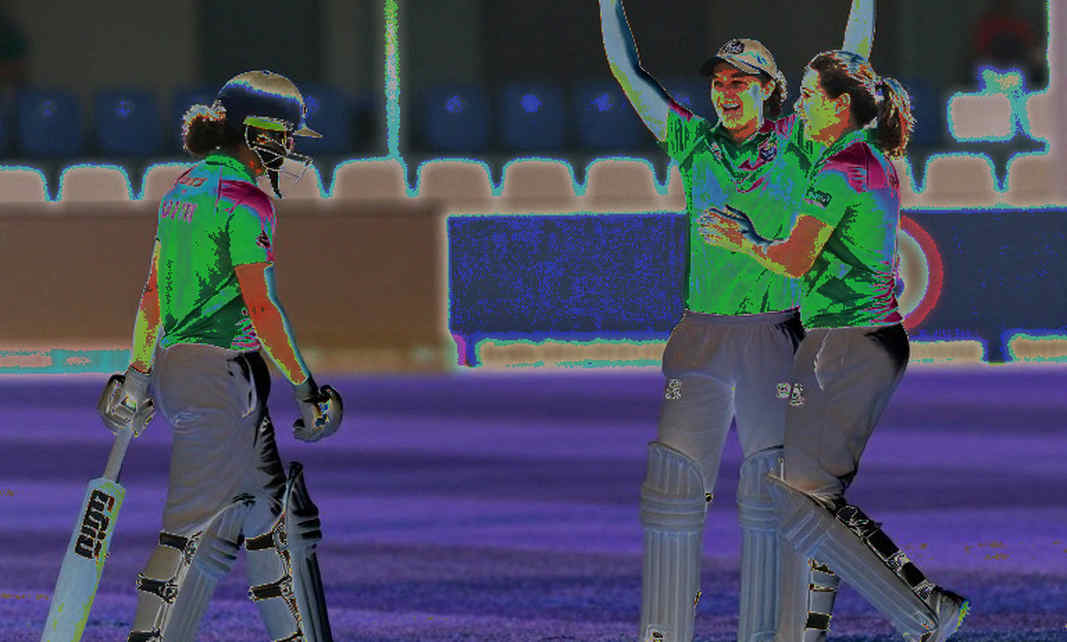
Now the counter-branch. When judging a result, I always ask: what did the batter actually see? When Schutt seamed the new ball, even at 110-120 kph, Brisbane's carry and bounce gave the batter almost no time. On a television frame it looks like a bad shot; on the 22 yards it was close to inevitable. The spectator's eye and the umpire's eye are never the same.
One more point belongs here. If officiating infrastructure is thin, that should be stated. The umpires made no clear error in this series, but the question does not end there. In women's cricket, technology infrastructure still does not receive the same investment as the men's game — camera counts vary by venue, ball-tracking availability differs. A lower frame rate pushes umpires toward inference, and that opens gaps in decision consistency.
Takeaway: what to watch next series
On Bangladesh's next away tour I will watch three things. First, the score when the first three wickets fall — if it stays in the 18 range, the structural weakness is unchanged. Second, whether Swarna Akter's strike rate clears 70 across her next five to ten innings. Third, how many middle-order batters contribute — a total built on two batters will not pass 150.
Australia face a question too. Winning a dead rubber while testing the bench is the mark of an experienced side. Holding that depth through a crowded calendar is the real challenge, and rotation is the decision point. Is the tier gap in women's cricket widening? This 164-balls-to-spare win in Brisbane points a finger at it.